'%3e %3cpath d='M15.9571 0.231934L0.147583 9.39139V32.66L15.9571 41.8195L31.7665 32.66V9.39139L15.9571 0.231934ZM15.9571 33.0172L7.68318 28.2206V13.7798L15.9571 9.00869V23.424L24.2309 28.2206L15.9571 33.0172Z' fill='%23170E30'/%3e %3cpath d='M107.275 23.3727C107.275 22.9645 107.275 22.6073 107.275 22.2756C107.275 21.6377 107.021 20.311 106.766 19.7242C104.628 14.6214 96.3791 15.5144 95.5645 21.3316C94.648 28.0417 102.438 30.9248 106.613 26.2302L104.678 24.929C102.464 26.8936 98.9759 26.5619 98.2885 23.3982H106.384H107.275V23.3727ZM98.2885 21.3826C99.0268 17.9382 103.966 17.7596 104.449 21.3826H98.2885ZM58.472 16.5095C53.9914 15.7441 51.1147 19.1629 51.522 23.4492C51.9802 28.0672 57.8865 30.2614 61.0688 26.766V28.1438H63.9964V16.3309C63.9964 16.3309 61.1706 17.9638 61.0433 18.0403C61.0433 18.0403 59.7959 16.7391 58.472 16.5095ZM57.3264 25.822C53.5077 25.3883 53.5332 19.6987 57.0464 19.1119C62.469 18.1934 62.5963 26.4088 57.3264 25.822ZM126.929 25.4648C126.471 29.5981 118.197 29.3429 116.924 25.6944L119.011 24.4698C119.597 26.1537 122.881 27.1487 123.95 25.6944C125.274 23.9085 121.048 23.4747 120.055 23.092C118.91 22.6328 117.586 21.8419 117.408 20.5151C116.72 15.5655 124.765 14.9786 126.623 18.6781L124.689 19.8263C124.103 18.2954 120.157 17.479 120.284 19.6222C120.361 20.8468 123.517 21.204 124.561 21.6633C126.318 22.4287 127.132 23.4747 126.929 25.4648ZM90.5492 18.2954C87.2142 14.3918 81.3334 16.8667 80.8497 21.7908C80.3151 27.4294 86.5523 30.8993 90.5238 26.6129V28.1438H93.2987V12.1211H90.5238V18.2699L90.5492 18.2954ZM87.7998 25.7965C83.1409 26.5874 82.2499 19.7497 86.4759 19.0864C91.2366 18.3465 92.0003 25.0566 87.7998 25.7965ZM75.8599 18.2954L74.918 17.3004C70.0555 14.3408 65.0657 19.0098 66.4404 24.2402C67.4333 28.0162 72.2958 29.9808 75.3253 27.2253C75.5544 27.0212 75.6053 26.6895 75.8599 26.6129V28.1438H78.6348V12.1211H75.8599V18.2699V18.2954ZM73.1104 25.7965C68.3752 26.4854 67.7897 19.7497 71.8121 19.1119C76.7 18.321 77.311 25.2097 73.1104 25.7965ZM112.392 16.6115H109.465V28.1693H112.392V21.102L115.6 19.2394V16.3054C114.709 16.8156 112.876 17.8872 112.392 18.1679V16.6115ZM42.4335 25.3883H49.969V28.1693H39.353V13.7795H42.4335V25.3883Z' fill='%23170E30'/%3e %3c/g%3e %3cdefs%3e %3cclipPath id='clip0_1_15718'%3e %3crect width='127' height='42' fill='white'/%3e %3c/clipPath%3e %3c/defs%3e %3c/svg%3e)


A new Harvard Health review is here to tell you that you’re not taking stretching seriously enough, and even if you are stretching every day, there’s a chance that you’re doing it wrong.
Why is stretching important?
It’s absolutely paramount for your health to stretch, whether you’re active or inactive. Your sedentary lifestyle that necessitates sitting in an uncomfortable desk chair for hours on end can cause your hamstrings to become tight. This can cause pain while walking or attempting to exercise.
Not stretching can also severely impact any muscle you use for repetitive movement, whether you spend most of your time sitting, typing, standing, or lying down. Being in one position for too long can cause stiffness all over, resulting in tense, weak muscles that can’t protect joints against potential injury.
Interestingly, stretching is equally important if you’re a gym buff. Generally, people with less muscle mass are naturally more flexible than people with more muscle mass. Some fitness experts advise that modern forms of isometric, weightlifting, or bench-pressing exercises make muscles so large that it’s difficult to stretch without getting in your own way. Others attribute this to muscular individuals having more passive tension, as muscles are much tenser and tighter than fat.
What muscles should you stretch?
If you want to start stretching, but aren’t sure where or how, start simple. Ideally, you should be attempting to stretch all the major muscle groups, which Harvard experts have narrowed down to neck, shoulders, chest, trunk, lower back, hips, legs, and ankles.
However, if you’re just a beginner, stretching everything in your body in one session seems like a lofty goal. To start, if something hurts, stretch it. For most people, this would include back, neck, and shoulder stretches, as many suffer from pain in those areas because of their sedentary lifestyles and frequent sitting.
There are a number of healthy ways you can stretch. Tai chi and yoga are easy for some, as they often come with supportive instructors who can provide tips and pointers for each position. Some people just stretch on their own, especially if they’re already gym rats with yoga mats and resistance bands.
Timing your stretching
There’s been an ongoing debate as to whether or not you should stretch before or after your workouts, but Harvard experts make it clear: Exercise first, stretch later. You’ll be warming up the tissues in your body, increasing blood flow, and loosening up your muscle fibers.
However, you don’t need to save all of your stretching for after the workout, as it only takes about five or 10 minutes to warm the muscles up sufficiently enough for stretches. This prestretching workout can be anything from walking to aerobic exercise to weightlifting.
As for how long you should stretch, keep it regular but don’t overdo it. Start with stretching two days a week, then three, with your ultimate goal being four days a week of stretching.
During your twice-a-week stretching sessions, if you’re choosing to do stretches and not tai chi or yoga, there are a couple of important things to keep in mind. Your total ideal stretching time with each muscle group should be 60 seconds, but how long you’re able to hold your stretches is dependent on your fitness level. You should try to work your way up to holding stretches for 30 seconds at a time, without bouncing into the stretch. However, not everyone can start that way, so if 30 seconds is too much, try breaking down your 60-second stretching into 15- or 20-second intervals with small breaks in between.
Harvard’s recommended stretches
Now that you know how to stretch and why it’s important, Harvard Health has some exercises to recommend.
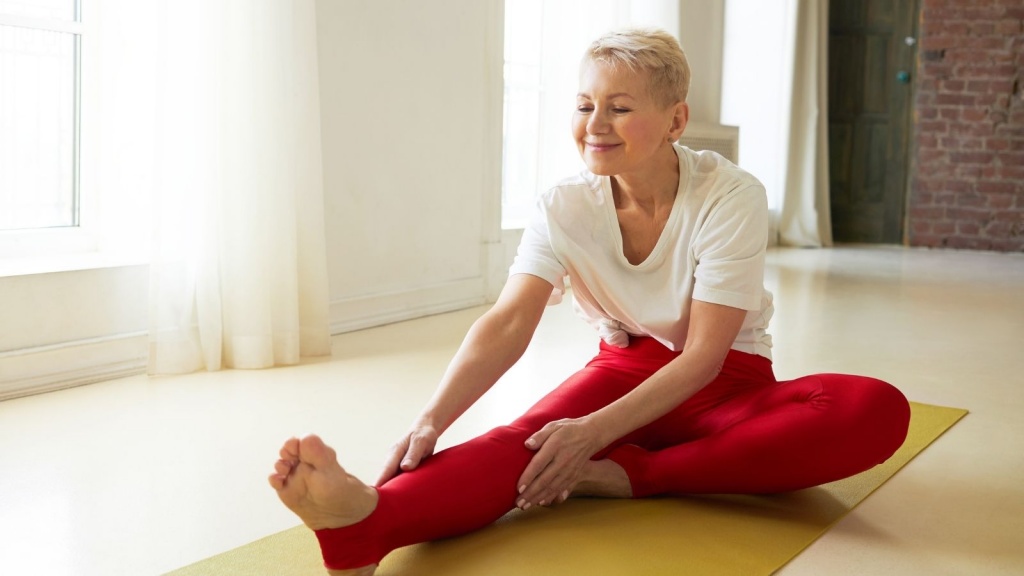
Floor hamstring stretch
The first exercise is a floor hamstring stretch, which can be done on the floor, or somewhere more comfortable. Lie flat on your back with your hands to your sides and elevate one leg so that it’s perpendicular to your body, ideally at a 90-degree angle from your other leg and the top half of your body.
Pull your toes into your body so that your leg is also perpendicular to your foot. You should feel a stretch in the back of your calf. Hold this for the recommended 30 seconds (or less, if you’re unable to do 30 seconds at a time), and then rest.
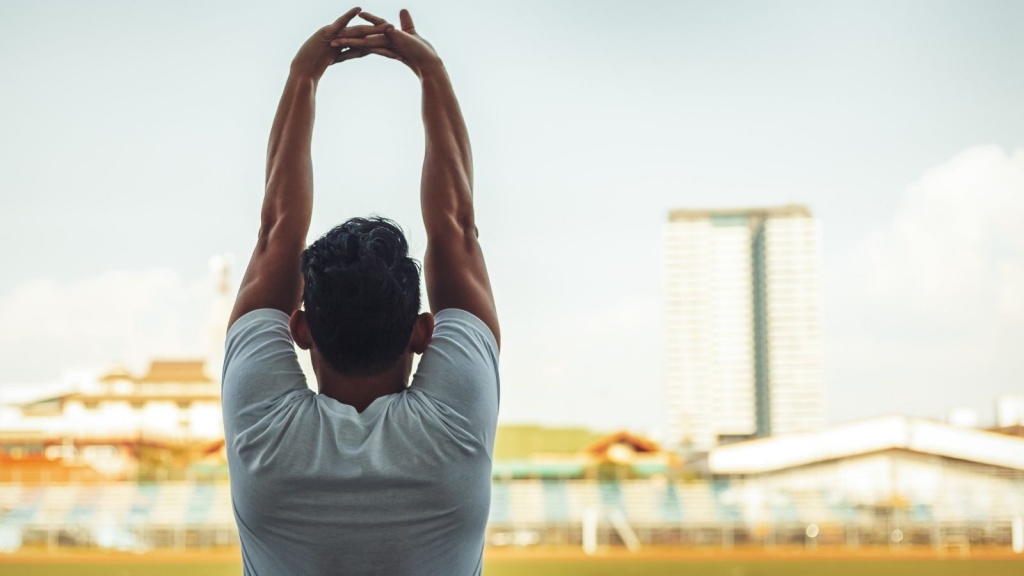
Full body stretch
Next, do a full-body stretch, which activates almost every muscle group in your body. Start standing and clasp your hands over your head. Shift your weight to the balls of your feet, extend your chest and back, and reach for the skies as much as you can without hyperextending. Hold this stretch for 15 seconds, then relax. Do three more reps until you make it to 60 seconds.
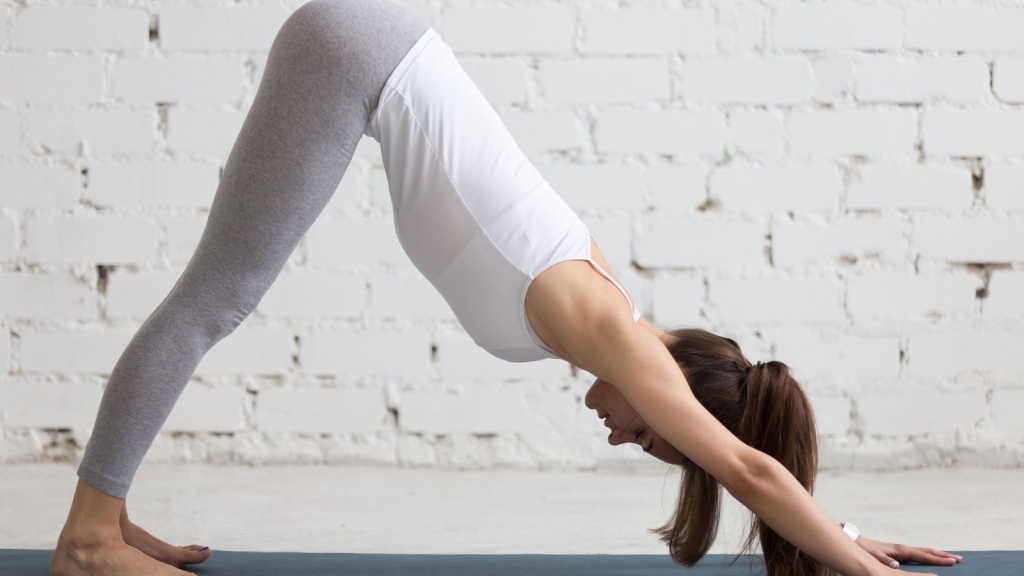
Downward dog
Finally, end with the old standard of downward dog. Start on all fours, with your hands and feet shoulder-width apart and behind in the air. Shift your weight slightly back and attempt to place your heels on the ground not by bending your knees but by extending your back.
Your body should look like a pyramid, with straight legs, a straight back, and a bend at your hips. Hold this for 30 seconds if you can, then relax, and do one more rep.