'%3e %3cpath d='M15.9571 0.231934L0.147583 9.39139V32.66L15.9571 41.8195L31.7665 32.66V9.39139L15.9571 0.231934ZM15.9571 33.0172L7.68318 28.2206V13.7798L15.9571 9.00869V23.424L24.2309 28.2206L15.9571 33.0172Z' fill='%23170E30'/%3e %3cpath d='M107.275 23.3727C107.275 22.9645 107.275 22.6073 107.275 22.2756C107.275 21.6377 107.021 20.311 106.766 19.7242C104.628 14.6214 96.3791 15.5144 95.5645 21.3316C94.648 28.0417 102.438 30.9248 106.613 26.2302L104.678 24.929C102.464 26.8936 98.9759 26.5619 98.2885 23.3982H106.384H107.275V23.3727ZM98.2885 21.3826C99.0268 17.9382 103.966 17.7596 104.449 21.3826H98.2885ZM58.472 16.5095C53.9914 15.7441 51.1147 19.1629 51.522 23.4492C51.9802 28.0672 57.8865 30.2614 61.0688 26.766V28.1438H63.9964V16.3309C63.9964 16.3309 61.1706 17.9638 61.0433 18.0403C61.0433 18.0403 59.7959 16.7391 58.472 16.5095ZM57.3264 25.822C53.5077 25.3883 53.5332 19.6987 57.0464 19.1119C62.469 18.1934 62.5963 26.4088 57.3264 25.822ZM126.929 25.4648C126.471 29.5981 118.197 29.3429 116.924 25.6944L119.011 24.4698C119.597 26.1537 122.881 27.1487 123.95 25.6944C125.274 23.9085 121.048 23.4747 120.055 23.092C118.91 22.6328 117.586 21.8419 117.408 20.5151C116.72 15.5655 124.765 14.9786 126.623 18.6781L124.689 19.8263C124.103 18.2954 120.157 17.479 120.284 19.6222C120.361 20.8468 123.517 21.204 124.561 21.6633C126.318 22.4287 127.132 23.4747 126.929 25.4648ZM90.5492 18.2954C87.2142 14.3918 81.3334 16.8667 80.8497 21.7908C80.3151 27.4294 86.5523 30.8993 90.5238 26.6129V28.1438H93.2987V12.1211H90.5238V18.2699L90.5492 18.2954ZM87.7998 25.7965C83.1409 26.5874 82.2499 19.7497 86.4759 19.0864C91.2366 18.3465 92.0003 25.0566 87.7998 25.7965ZM75.8599 18.2954L74.918 17.3004C70.0555 14.3408 65.0657 19.0098 66.4404 24.2402C67.4333 28.0162 72.2958 29.9808 75.3253 27.2253C75.5544 27.0212 75.6053 26.6895 75.8599 26.6129V28.1438H78.6348V12.1211H75.8599V18.2699V18.2954ZM73.1104 25.7965C68.3752 26.4854 67.7897 19.7497 71.8121 19.1119C76.7 18.321 77.311 25.2097 73.1104 25.7965ZM112.392 16.6115H109.465V28.1693H112.392V21.102L115.6 19.2394V16.3054C114.709 16.8156 112.876 17.8872 112.392 18.1679V16.6115ZM42.4335 25.3883H49.969V28.1693H39.353V13.7795H42.4335V25.3883Z' fill='%23170E30'/%3e %3c/g%3e %3cdefs%3e %3cclipPath id='clip0_1_15718'%3e %3crect width='127' height='42' fill='white'/%3e %3c/clipPath%3e %3c/defs%3e %3c/svg%3e)

Looking to boost your resume for 2025? Knowing what skills to include on a resume can set you apart from the competition. This article will walk you through the key hard and soft skills employers are seeking and provide tips on how to effectively showcase them on your resume.
Key Takeaways
A successful resume includes a balanced blend of hard skills and soft skills, essential for showcasing a candidate’s qualifications.
Tailoring the skills section to align with job descriptions significantly improves candidates’ chances of catching hiring managers’ attention.
Employers prioritize analytical, communication, problem-solving, and leadership skills, making them essential for demonstrating suitability in various roles.
Understanding Resume Skills
Resume skills are crucial, outlining a candidate’s relevant abilities and qualities to aid employers in hiring decisions. A resume typically includes two main categories of skills. These are hard skills and soft skills. Effectively mentioning both hard and soft skills can catch the hiring manager’s attention, creating a balanced representation of your capabilities.
Candidates often struggle to balance resume length with the quality of information provided.
What Are Hard Skills?
Hard skills refer to the technical abilities that are specific to a job. These skills are quantifiable and measurable. Examples include specific programming languages and using photo editing software like Photoshop. These hard skill are vital for completing tasks, teachable, and significantly impact job performance.
What Are Soft Skills?
Soft skills are personal attributes that enhance workplace interactions and facilitate effective communication. Examples include:
Communication
Creativity
Leadership
Teamwork
Time management
Conflict resolution
Key leadership qualities include managing and inspiring others, emotional intelligence, communication, and influencing skills.
How Hard and Soft Skills Differ
Hard skills are specific, teachable abilities that can be defined and measured, such as coding or accounting. In contrast, soft skills are interpersonal skills that help individuals communicate, collaborate, and interact effectively with others, like teamwork and problem-solving.
The combination of hard and soft skills enhances overall job performance by ensuring technical competency and effective collaboration in the workplace.
Why Skills Matter on Your Resume
A comprehensive skill set on a resume enhances the chances of passing through Applicant Tracking Systems (ATS). These systems often filter out resumes that don’t contain specific keywords, making it essential to include relevant skills. Demonstrating a wide range of skills helps showcase both technical breadth and depth to potential employers.
Effective skill listing on a resume can significantly affect an applicant’s success in the hiring process. Hiring managers quickly gauge a candidate’s qualifications by scanning the skills section. Digital literacy is increasingly important, with many jobs requiring proficiency in various software and hardware applications.
Listing skills explicitly allows hiring managers to quickly gauge a candidate’s qualifications. Highlighting your abilities, whether in customer service, technical, or project management, can make a strong impression and improve your hiring manager interview chances.
How to Effectively List Skills on Your Resume
Listing skills involves analyzing the job description, selecting applicable skills, and presenting them clearly. Organize your skills based on relevance, starting with the most applicable skills for the job. Identify essential skills for the role by evaluating job descriptions, ensuring to differentiate between relevant and irrelevant information.
Relevant certifications can enhance the skills section if aligned with job requirements. Effectively listing skills on a resume maximizes the impact of your application, making it crucial for job seekers.
Tailor Skills to the Job Description
Customizing the skills listed on a resume according to the job description can highlight the candidate’s suitability for the role. Tailoring the skills listed on the resume to the job applied for is crucial.
Job postings help identify essential skills for a tailored resume. For example, a sales resume should include lead generation, CRM experience, and market research based on the job description. Including employer-specific skills can enhance your chances of being noticed.
Create a Dedicated Skills Section
The skills section should be positioned near the top of the page, either next to or after the work experience section. This section should list essential job-relevant skills that enhance qualifications.
Organize the skills section using bullet points to list skills, and consider grouping skills into Technical and Soft Skills if relevant. A clear skills section provides key information for hiring managers and enhances visibility.
Highlight Proficiency Levels
Employers appreciate measurable proficiency levels to assess candidates’ hard skills. Use a proficiency scale for measurable hard skills. Soft skills should not be rated on a scale. Clearly indicating proficiency helps hiring managers understand your capabilities better.
Integrate Skills Throughout Your Resume
Integrating skills into various resume sections reinforces their importance to potential employers. In the work experience section, list achievements that demonstrate how skills contributed to results. Achievements in work history illustrate skills and provide concrete evidence of qualifications.
A detailed skills section can guide interview discussions, helping candidates highlight their strengths.
Essential Skills for Any Resume

Employers now prioritize both technical and interpersonal skills in candidates. Analytical skills involve evaluating data and trends, relevant across various industries from finance to marketing. Creativity is important for problem-solving and innovation, especially in fields like marketing and product development. Strong communication skills enhance the ability to articulate ideas clearly in diverse work environments.
Emotional intelligence aids in team collaboration and conflict resolution, making it a key skill in the workplace. Leadership skills are valuable even outside of management roles, demonstrating initiative and the ability to guide projects. Time management skills are essential for meeting deadlines and prioritizing tasks effectively in any job setting.
Active listening is crucial for effective communication, allowing you to fully engage with others. Transferable skills are abilities applicable across various job roles and industries, such as communication and problem-solving.
Communication Skills
Effective communication is vital across nearly all professions, enhancing workplace interaction and collaboration. It encompasses verbal, nonverbal, and written forms to convey messages accurately. Key components include clarity, messaging precision, and collaborative ability.
In healthcare, professionals must interact with patients and collaborate with teams consistently. Soft skills like emotional intelligence help individuals adapt to varying workplace dynamics.
Problem-Solving Skills
Problem-solving involves identifying issues and implementing effective solutions. Problem-solving involves recognizing issues and developing efficient solutions, making it a highly sought-after skill across various industries.
These organizational skills enable professionals to navigate challenges and enhance productivity.
Time Management Skills
Time management is crucial for increasing workplace productivity. Effective time management leads to better task planning and prioritization. Effective time management helps maintain a healthy work-life balance while meeting deadlines.
Successful time management enhances personal satisfaction and professional success.
Teamwork Skills
Teamwork skills are essential for achieving common goals and ensuring successful collaboration among team members. In teamwork, effective collaboration requires clear communication and mutual respect among team members.
Attention to detail ensures accuracy and effectiveness in teamwork.
Leadership Skills
Leadership skills are crucial for successfully managing projects and guiding teams towards common goals. Strong leadership involves motivating and guiding the team toward shared objectives, along with essential project management skills.
Effective leadership inspires teams to collaborate, innovate, and overcome obstacles.
Technical Skills
Computer skills are considered important for resumes because they are priceless assets for most jobs. Beginners should be proficient in Microsoft Office and Google Workspace. Basic familiarity with project management tools is also recommended. Certifications in the skills section can bolster qualifications.
Industry-Specific Skills
Industry-specific skills meet the unique demands of different sectors. Basic administrative skills suit office settings, while specialized skills are necessary in other fields. Managing resources, timelines, deliverables, and processes is universally valued. Problem-solving skills are highly valued by IT professionals and managers.
Troubleshooting technical issues, resolving complaints, and streamlining processes require strong problem-solving skills and customer service skills.
IT and Software Development
Programming and software proficiency are critical for IT professionals. Proficiency in one or two programming languages is highly beneficial. Over 70% of jobs demand medium-to-high-level digital skills. This underscores the importance of digital proficiency in the workforce. Essential digital skills include computer proficiency and experience with video meeting software. Familiarity with project management programs is also important.
Marketing and Sales
Digital marketing skills are crucial for engaging customers in today’s landscape. Key digital marketing skills include content creation, search engine optimization (SEO), and social media marketing. Negotiation skills are essential in sales for managing client relationships and closing deals.
Combined, strong digital marketing and negotiation skills enhance a company’s success in competitive markets.
Healthcare and Nursing
Core competencies in patient care and medical knowledge are crucial for healthcare professionals. Nurses require critical thinking to assess patient situations and make informed decisions rapidly.
Attention to detail in nursing helps avoid medical errors and ensures accurate patient documentation.
Finance and Accounting
Financial reporting skills are necessary for clear communication of financial information to stakeholders. These skills help accountants convey financial performance clearly to stakeholders.
Financial reporting is vital for finance professionals to gauge a company’s past performance.
Education and Training
Educators must be adept at lesson planning to develop effective and engaging learning experiences for students. Proficient use of technology in lesson delivery is increasingly important for educators.
Classroom management skills are essential for maintaining order and facilitating student engagement.
Transferable Skills for Career Changes
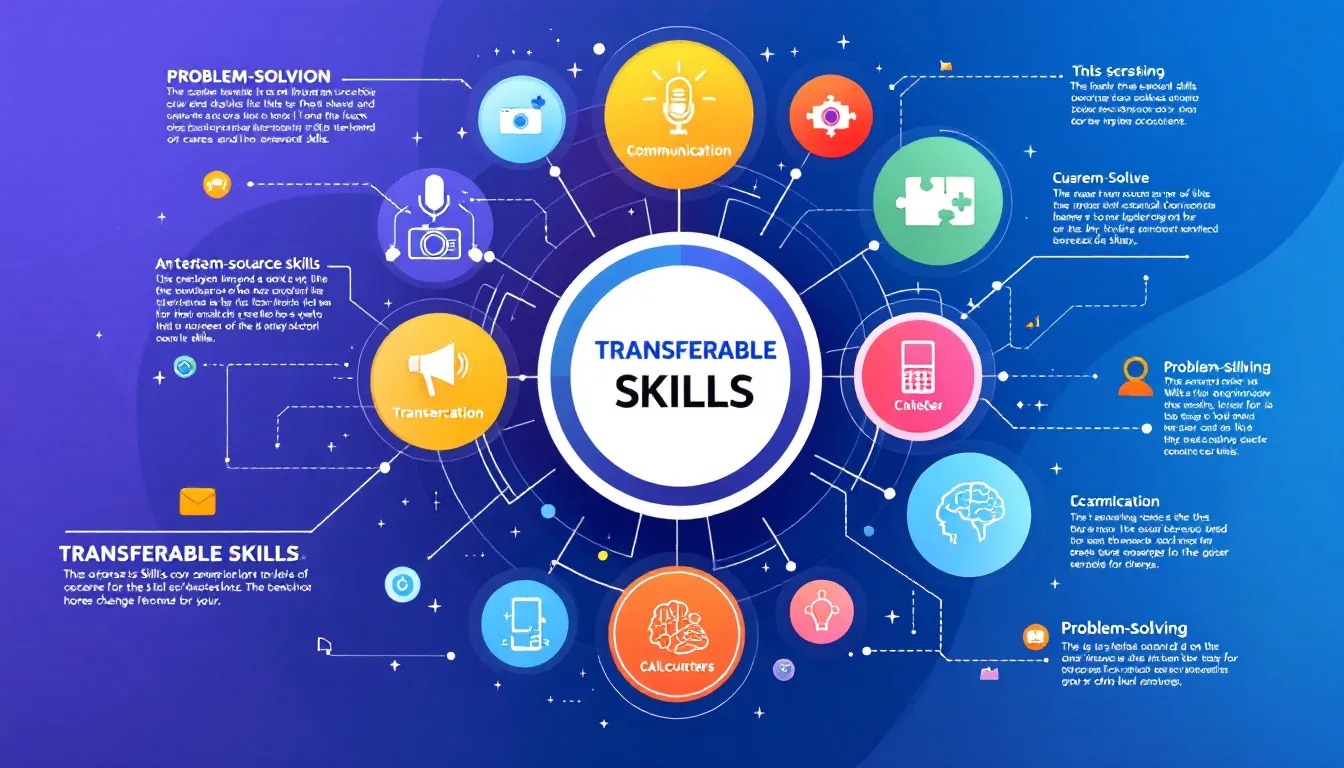
Transferable skills are abilities not directly related to a specific job, but which apply across various roles, demonstrating a candidate’s versatility. Examples of transferable skills include communication, teamwork, and problem-solving, which are essential in almost every professional setting. These skills can advantage job seekers changing careers or applying for different roles.
Recent skills or certifications reflect a candidate’s commitment to professional development and adaptability. Emphasizing these skills can bridge the gap between past experiences and future aspirations.
How Many Skills to Include on Your Resume
Include around six to eight key skills on your resume. This will help highlight your qualifications effectively. Listing about 10 skills, focusing on those most relevant to the job, is advisable. Avoid overcrowding your resume with unrelated abilities.
If you have extra space on your resume, consider adding complementary soft skills or relevant certifications. This keeps your resume concise and relevant, increasing your chances of impressing hiring managers.
Formatting the Skills Section
Bullet points in the skills section enhance organization and readability. List skills under a clear header to indicate their relevance. Keep the skills section concise, ideally with five to ten relevant abilities.
Visual elements like skill bars can effectively illustrate proficiency levels. A well-organized skills section prioritizes technical abilities over interpersonal skills for better visibility.
Summary
In summary, crafting a compelling resume for 2025 involves a strategic mix of both hard and soft skills. Understanding the difference between these skills and effectively listing them can make a significant impact on your job search. Tailoring your skills to the job description, creating a dedicated skills section, highlighting proficiency levels, and integrating skills throughout your resume are key strategies to enhance your resume’s effectiveness.
Essential skills like communication, problem-solving, time management, teamwork, leadership, and technical skills are universally valued and should be prominently featured on your resume. Additionally, industry-specific skills tailored to your field can further distinguish you from other candidates.
Ultimately, the goal is to present a balanced and well-rounded skill set that showcases your unique qualifications and strengths. By following these guidelines, you’ll be well-equipped to create a resume that stands out in the competitive job market of 2025.
Frequently Asked Questions
What are the most important skills to include on a resume in 2025?
In 2025, it’s essential to include a combination of hard skills, such as technical abilities, and soft skills, like communication and teamwork, on your resume. Tailoring these skills to align with the specific job description will enhance your chances of success.
How should I list my skills on a resume?
List your skills in a dedicated section at the top of your resume using bullet points, and consider categorizing them into Technical Skills and Soft Skills for clarity and emphasis. This approach makes it easy for employers to quickly identify your qualifications.
How many skills should I include on my resume?
Include six to ten key skills on your resume, emphasizing those most relevant to the position to maintain clarity and impact. This approach helps to avoid overcrowding and showcases your qualifications effectively.
Should I include proficiency levels for my skills on my resume?
Yes, you should include proficiency levels for your hard skills on your resume to clearly communicate your capabilities to hiring managers, but avoid rating soft skills.
How can I make my resume stand out to hiring managers?
To make your resume stand out to hiring managers, tailor your skills to the job description and highlight relevant certifications while ensuring clear formatting and visual elements for enhanced readability. This targeted approach will effectively showcase your qualifications.