'%3e %3cpath d='M15.9571 0.231934L0.147583 9.39139V32.66L15.9571 41.8195L31.7665 32.66V9.39139L15.9571 0.231934ZM15.9571 33.0172L7.68318 28.2206V13.7798L15.9571 9.00869V23.424L24.2309 28.2206L15.9571 33.0172Z' fill='%23170E30'/%3e %3cpath d='M107.275 23.3727C107.275 22.9645 107.275 22.6073 107.275 22.2756C107.275 21.6377 107.021 20.311 106.766 19.7242C104.628 14.6214 96.3791 15.5144 95.5645 21.3316C94.648 28.0417 102.438 30.9248 106.613 26.2302L104.678 24.929C102.464 26.8936 98.9759 26.5619 98.2885 23.3982H106.384H107.275V23.3727ZM98.2885 21.3826C99.0268 17.9382 103.966 17.7596 104.449 21.3826H98.2885ZM58.472 16.5095C53.9914 15.7441 51.1147 19.1629 51.522 23.4492C51.9802 28.0672 57.8865 30.2614 61.0688 26.766V28.1438H63.9964V16.3309C63.9964 16.3309 61.1706 17.9638 61.0433 18.0403C61.0433 18.0403 59.7959 16.7391 58.472 16.5095ZM57.3264 25.822C53.5077 25.3883 53.5332 19.6987 57.0464 19.1119C62.469 18.1934 62.5963 26.4088 57.3264 25.822ZM126.929 25.4648C126.471 29.5981 118.197 29.3429 116.924 25.6944L119.011 24.4698C119.597 26.1537 122.881 27.1487 123.95 25.6944C125.274 23.9085 121.048 23.4747 120.055 23.092C118.91 22.6328 117.586 21.8419 117.408 20.5151C116.72 15.5655 124.765 14.9786 126.623 18.6781L124.689 19.8263C124.103 18.2954 120.157 17.479 120.284 19.6222C120.361 20.8468 123.517 21.204 124.561 21.6633C126.318 22.4287 127.132 23.4747 126.929 25.4648ZM90.5492 18.2954C87.2142 14.3918 81.3334 16.8667 80.8497 21.7908C80.3151 27.4294 86.5523 30.8993 90.5238 26.6129V28.1438H93.2987V12.1211H90.5238V18.2699L90.5492 18.2954ZM87.7998 25.7965C83.1409 26.5874 82.2499 19.7497 86.4759 19.0864C91.2366 18.3465 92.0003 25.0566 87.7998 25.7965ZM75.8599 18.2954L74.918 17.3004C70.0555 14.3408 65.0657 19.0098 66.4404 24.2402C67.4333 28.0162 72.2958 29.9808 75.3253 27.2253C75.5544 27.0212 75.6053 26.6895 75.8599 26.6129V28.1438H78.6348V12.1211H75.8599V18.2699V18.2954ZM73.1104 25.7965C68.3752 26.4854 67.7897 19.7497 71.8121 19.1119C76.7 18.321 77.311 25.2097 73.1104 25.7965ZM112.392 16.6115H109.465V28.1693H112.392V21.102L115.6 19.2394V16.3054C114.709 16.8156 112.876 17.8872 112.392 18.1679V16.6115ZM42.4335 25.3883H49.969V28.1693H39.353V13.7795H42.4335V25.3883Z' fill='%23170E30'/%3e %3c/g%3e %3cdefs%3e %3cclipPath id='clip0_1_15718'%3e %3crect width='127' height='42' fill='white'/%3e %3c/clipPath%3e %3c/defs%3e %3c/svg%3e)

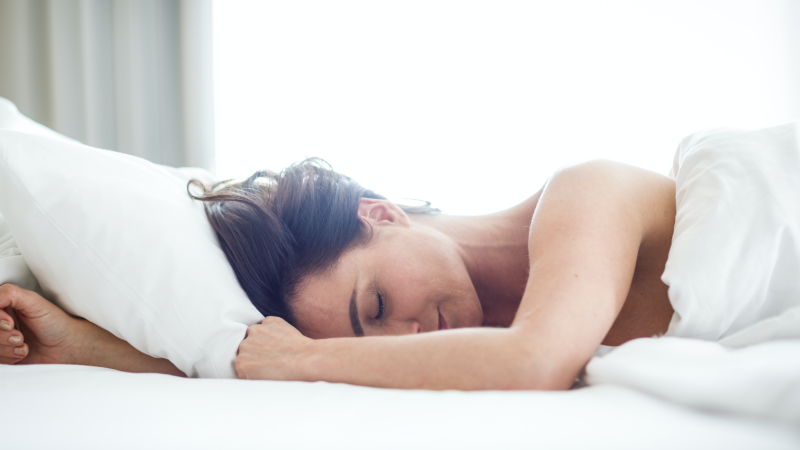
Getting proper sleep is absolutely essential for maintaining mood and emotional well being; sleep has a direct effect on almost every type of mental health disorder.
There’s good news, though: new studies show that people who go to sleep earlier and rise earlier appear to have a reduced risk of depression. Aiming for a consistent sleep schedule may especially help night owls ward off depression.
In May, a JAMA Psychiatry genetic study of 840,000 people found that those with genes linked to early rising were less likely to become depressed. Just one month later, another study published in Molecular Psychiatry suggested that simply remaining consistent in relation to your working schedule can be enough to evade any social jetlag that can come with sleeping irregular hours.
So what does this mean for night owls? It depends. Night owls who tend to work late into the evening might already be following a healthy sleep schedule. But, unless you’re working a grave shift or regularly take on overtime hours, chances are good that you’ll benefit from shifting your bedtime and alarm clock a couple of hours earlier.
Below, we spoke to our own set of sleep specialists. If you’re struggling to get up in the morning these stats might push you to start getting up for that morning coffee a little earlier.
How many hours of sleep do you need?
The recommended amount of sleep is 7-9 hours for most adults, however, according to the CDC 1 out of 3 people is getting enough sleep.
“Going to bed earlier is the first step to getting quality shut eye,” explains Shannon Dolan, Nutritional Therapy Practitioner and Corporate Wellness Consultant in Austin, Texas. “The body runs off of it’s natural circadian rhythm which is synced up day and night.”
Ideally, cortisol levels are at their highest in the morning and drop in the evening. Going to bed closer to when it starts to get dark out can enhance your sleep by signaling the production of melatonin.
How can night owls ward off depression?
Most people are aware that they need a certain amount of sleep but don’t give themselves enough time to settle into bed and fall asleep, especially night owls who go to bed way too late to get adequate sleep. For instance, a person who needs 8 hours might not realize that they need at least 8.5 – 9 hours in bed to achieve 8 total hours of sleep. Thus, it’s beneficial to go to bed earlier in order to guarantee you achieve enough total sleep time.
“Going to bed earlier and waking up earlier increases your daylight exposure. Getting enough sunlight is essential for keeping our circadian rhythm, our 24 hour internal clock, well regulated,” explains Dr. Chelsie Rohrscheib, Ph.D., Sleep Specialist & Neuroscientist.
“Science has shown that people with well regulated circadian rhythms fall asleep faster and get better quality sleep. Having a well functioning circadian rhythm is also essential for maintaining your mood and mental health.”
Does sleep consistency affect mood?
“Getting enough high quality sleep is absolutely essential for maintaining your mood and mental health,” says Dr. Rohrscheib.
“Clinical studies have shown that people who are under sleep are at a greater risk of poor mood, developing a mood disorder like anxiety and depression, and have worse treatment outcomes.”
According to Dr. Rohrscheib, lack of sleep makes the brain less efficient at dealing with stress and stressful situations. We also release more of the stress hormone, cortisol, when we are sleep deprived. Stress itself is a major contributor to insomnia and lost sleep, causing a snowball effect that can eventually lead to the development of a mental health disorder.
“It may take some time to be able to fall asleep earlier at first, but as long as the lights are off or dimmed and you are in a relaxed state you are enhancing your body’s ability to fall asleep,” adds Dolan.