'%3e %3cpath d='M15.9571 0.231934L0.147583 9.39139V32.66L15.9571 41.8195L31.7665 32.66V9.39139L15.9571 0.231934ZM15.9571 33.0172L7.68318 28.2206V13.7798L15.9571 9.00869V23.424L24.2309 28.2206L15.9571 33.0172Z' fill='%23170E30'/%3e %3cpath d='M107.275 23.3727C107.275 22.9645 107.275 22.6073 107.275 22.2756C107.275 21.6377 107.021 20.311 106.766 19.7242C104.628 14.6214 96.3791 15.5144 95.5645 21.3316C94.648 28.0417 102.438 30.9248 106.613 26.2302L104.678 24.929C102.464 26.8936 98.9759 26.5619 98.2885 23.3982H106.384H107.275V23.3727ZM98.2885 21.3826C99.0268 17.9382 103.966 17.7596 104.449 21.3826H98.2885ZM58.472 16.5095C53.9914 15.7441 51.1147 19.1629 51.522 23.4492C51.9802 28.0672 57.8865 30.2614 61.0688 26.766V28.1438H63.9964V16.3309C63.9964 16.3309 61.1706 17.9638 61.0433 18.0403C61.0433 18.0403 59.7959 16.7391 58.472 16.5095ZM57.3264 25.822C53.5077 25.3883 53.5332 19.6987 57.0464 19.1119C62.469 18.1934 62.5963 26.4088 57.3264 25.822ZM126.929 25.4648C126.471 29.5981 118.197 29.3429 116.924 25.6944L119.011 24.4698C119.597 26.1537 122.881 27.1487 123.95 25.6944C125.274 23.9085 121.048 23.4747 120.055 23.092C118.91 22.6328 117.586 21.8419 117.408 20.5151C116.72 15.5655 124.765 14.9786 126.623 18.6781L124.689 19.8263C124.103 18.2954 120.157 17.479 120.284 19.6222C120.361 20.8468 123.517 21.204 124.561 21.6633C126.318 22.4287 127.132 23.4747 126.929 25.4648ZM90.5492 18.2954C87.2142 14.3918 81.3334 16.8667 80.8497 21.7908C80.3151 27.4294 86.5523 30.8993 90.5238 26.6129V28.1438H93.2987V12.1211H90.5238V18.2699L90.5492 18.2954ZM87.7998 25.7965C83.1409 26.5874 82.2499 19.7497 86.4759 19.0864C91.2366 18.3465 92.0003 25.0566 87.7998 25.7965ZM75.8599 18.2954L74.918 17.3004C70.0555 14.3408 65.0657 19.0098 66.4404 24.2402C67.4333 28.0162 72.2958 29.9808 75.3253 27.2253C75.5544 27.0212 75.6053 26.6895 75.8599 26.6129V28.1438H78.6348V12.1211H75.8599V18.2699V18.2954ZM73.1104 25.7965C68.3752 26.4854 67.7897 19.7497 71.8121 19.1119C76.7 18.321 77.311 25.2097 73.1104 25.7965ZM112.392 16.6115H109.465V28.1693H112.392V21.102L115.6 19.2394V16.3054C114.709 16.8156 112.876 17.8872 112.392 18.1679V16.6115ZM42.4335 25.3883H49.969V28.1693H39.353V13.7795H42.4335V25.3883Z' fill='%23170E30'/%3e %3c/g%3e %3cdefs%3e %3cclipPath id='clip0_1_15718'%3e %3crect width='127' height='42' fill='white'/%3e %3c/clipPath%3e %3c/defs%3e %3c/svg%3e)

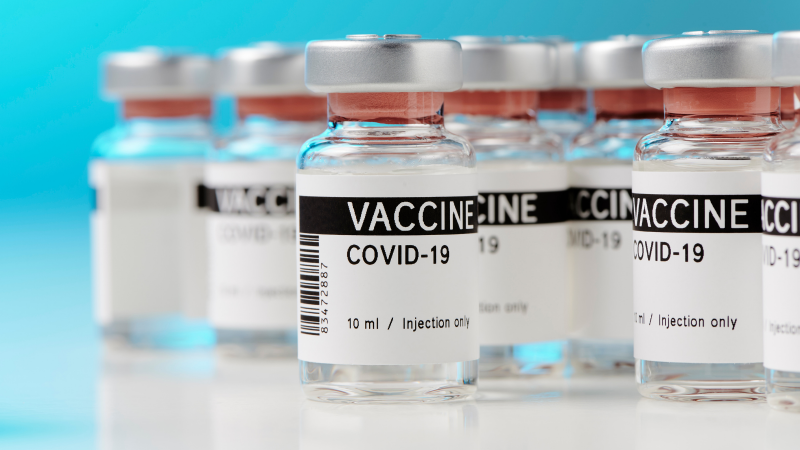
Yesterday, Pfizer expressed concerns that the immunity power of their vaccine may be waning sooner than expected.
As the more contagious Delta strain continues to affect counties in the U.S., the pharmaceutical company is seeking emergency authorization from the US Food and Drug Administration (FDA) for a booster shot to be ready by August.
Will everyone vaccinated need a booster shot?
As of the time of this writing, the FDA and the Centers for Disease and Control (CDC) repudiated the claim that Americans require a booster shot—from Pfizer or any other company.
“Americans who have been fully vaccinated do not need a booster shot at this time,” the CDC said in a statement.
The World Health Organization (WHO) says they want to collect more research before issuing an official decree on the need for booster shots, writing. As they put it: “Limited data is available on how long the protection from current doses lasts and whether an additional booster dose would be beneficial and for whom.”
Their ultimate decision will be especially relevant for the 80 million people who received the Pfizer vaccine.
Pfizer’s vaccine additionally accounts for two-thirds of doses administered across the European Union and it is the only vaccine available in Israel.
The Pfizer vaccine may not prevent infection after 6 months
According to data submitted by researchers from Pfizer and its partner BioNTech, their two-dose vaccine can reliably prevent death and hospitalizations as a result of COVID-19, but the same may not be true for both infection and symptomatic manifestations of the disease after six months.
This is why Pfizer is pushing for a booster shot between six and 12 months.
U.S officials disagree about what to do at this stage. The FDA, CDC, and the National Institutes of Health (NIH) have claimed that the available data suggests all of the vaccines currently available offer adequate protection for the coronavirus variants circulating.
The research literature identifies unvaccinated populations as the most at risk by a sizeable margin. Reinfection is possible after vaccination (thanks to a combination of factors including age, stress, and weight), but these rarely lead to fatal outcomes.
Mixing doses of the Pfizer and AstraZeneca COVID-19 vaccines may produce a stronger immune response than taking two doses from just AstraZeneca, a new study from the University of Oxford determined.
Countries like Spain and Germany have already reported positive results after administering either Pfizer or Moderna’s vaccines as a second dose to people who have already received a first dose of the AstraZeneca vaccine.
In the case of COVID-19, early research suggests that mixing Pfizer and AstraZeneca vaccine doses may not result in more antibodies than the standard two-shot Pfizer regimen, but it may produce a stronger immune response overall.
The order in which one received these doses produced different results: Taking the AstraZeneca vaccine before Pfizer’s induced a higher antibody count than the reverse order. The same was true with T-cell response. Patients demonstrated complete protection more quickly after mixing doses regardless of the order.
Still, most health experts are confident that if you are fully vaccinated the odds of experiencing severe manifestations of COVID-19 are extremely low.
“People who are fully vaccinated are protected from severe disease and death, including from the variants currently circulating in the country such as Delta,” the CDC and FDA said in a joint statement.
They went on to say they are prepared for booster doses if and when the science demonstrates that they are needed.