'%3e %3cpath d='M15.9571 0.231934L0.147583 9.39139V32.66L15.9571 41.8195L31.7665 32.66V9.39139L15.9571 0.231934ZM15.9571 33.0172L7.68318 28.2206V13.7798L15.9571 9.00869V23.424L24.2309 28.2206L15.9571 33.0172Z' fill='%23170E30'/%3e %3cpath d='M107.275 23.3727C107.275 22.9645 107.275 22.6073 107.275 22.2756C107.275 21.6377 107.021 20.311 106.766 19.7242C104.628 14.6214 96.3791 15.5144 95.5645 21.3316C94.648 28.0417 102.438 30.9248 106.613 26.2302L104.678 24.929C102.464 26.8936 98.9759 26.5619 98.2885 23.3982H106.384H107.275V23.3727ZM98.2885 21.3826C99.0268 17.9382 103.966 17.7596 104.449 21.3826H98.2885ZM58.472 16.5095C53.9914 15.7441 51.1147 19.1629 51.522 23.4492C51.9802 28.0672 57.8865 30.2614 61.0688 26.766V28.1438H63.9964V16.3309C63.9964 16.3309 61.1706 17.9638 61.0433 18.0403C61.0433 18.0403 59.7959 16.7391 58.472 16.5095ZM57.3264 25.822C53.5077 25.3883 53.5332 19.6987 57.0464 19.1119C62.469 18.1934 62.5963 26.4088 57.3264 25.822ZM126.929 25.4648C126.471 29.5981 118.197 29.3429 116.924 25.6944L119.011 24.4698C119.597 26.1537 122.881 27.1487 123.95 25.6944C125.274 23.9085 121.048 23.4747 120.055 23.092C118.91 22.6328 117.586 21.8419 117.408 20.5151C116.72 15.5655 124.765 14.9786 126.623 18.6781L124.689 19.8263C124.103 18.2954 120.157 17.479 120.284 19.6222C120.361 20.8468 123.517 21.204 124.561 21.6633C126.318 22.4287 127.132 23.4747 126.929 25.4648ZM90.5492 18.2954C87.2142 14.3918 81.3334 16.8667 80.8497 21.7908C80.3151 27.4294 86.5523 30.8993 90.5238 26.6129V28.1438H93.2987V12.1211H90.5238V18.2699L90.5492 18.2954ZM87.7998 25.7965C83.1409 26.5874 82.2499 19.7497 86.4759 19.0864C91.2366 18.3465 92.0003 25.0566 87.7998 25.7965ZM75.8599 18.2954L74.918 17.3004C70.0555 14.3408 65.0657 19.0098 66.4404 24.2402C67.4333 28.0162 72.2958 29.9808 75.3253 27.2253C75.5544 27.0212 75.6053 26.6895 75.8599 26.6129V28.1438H78.6348V12.1211H75.8599V18.2699V18.2954ZM73.1104 25.7965C68.3752 26.4854 67.7897 19.7497 71.8121 19.1119C76.7 18.321 77.311 25.2097 73.1104 25.7965ZM112.392 16.6115H109.465V28.1693H112.392V21.102L115.6 19.2394V16.3054C114.709 16.8156 112.876 17.8872 112.392 18.1679V16.6115ZM42.4335 25.3883H49.969V28.1693H39.353V13.7795H42.4335V25.3883Z' fill='%23170E30'/%3e %3c/g%3e %3cdefs%3e %3cclipPath id='clip0_1_15718'%3e %3crect width='127' height='42' fill='white'/%3e %3c/clipPath%3e %3c/defs%3e %3c/svg%3e)

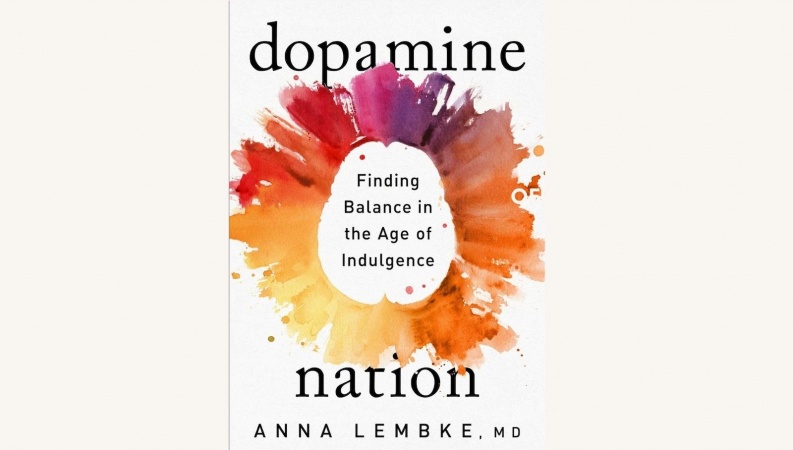
In her new book, “Dopamine Nation” — which just came out from Dutton Penguin Random House — Dr. Anna Lembke dives deeply into the topic of addiction with the unusual thesis that unhappiness today is a result of “overabundance rather than, for example, pain or trauma or inequality.”
Lembke, a psychiatrist who’s the medical director of addiction medicine at Stanford University and chief of the Stanford Addiction Medicine Dual Diagnosis Clinic, offers research-based tips on how to overcome dopamine cravings, whether from opioids or social-media addiction and in the process shares some of the wisdom she has seen in suffering.
Can you describe the evolution of your career?
I went to Stanford Medical school, then did a residency at Stanford before joining the faculty in 2001 where I started to see patients, primarily with mood disorders — not primarily focusing on addiction, but I realized that many of my patients struggled with drug or alcohol abuse, including prescription pills. So, I started to ask them about those problems and learned from my patients that there was a great need for healthcare providers to be educated and have expertise in the problems of addiction.
What is the new book about?
The thesis is that our primitive brains, evolving over a million years to approach pleasure and avoid pain are not adapted to the modern world where pleasurable stimuli are incredibly potent and infinite. Much of our unhappiness today is a result of overabundance rather than, for example, pain or trauma or inequality. Those factors play a role, but my thesis is that an overabundance of dopamine is the cause.
Do you have an audience in mind?
It’s broad, Gen-Zers and millennials, but older folks as well. Everyone of every age are struggling with this type of addiction. I was really thinking about individuals who get a little addicted to the things in our day-to-day lives. The average person, you could say.
Is this type of addiction seen in the workspace?
It certainly can be. Work is incentivized and rewarded with a dopamine surge. Many times performance is measured and quantified by comparisons between ourselves and others. When we are rewarded at work sometimes it has nothing related to the work itself. For example, in the medical profession, we are often able to get bonuses due to the number of patients we see rather than if those patients actually get better. These comparison metrics are divorced from the work itself, the incentives align to create a working frenzy that are focused on the rewards—usually monetary—rather than the intrinsic rewards derived from the meaning of the work itself.
Besides that, we often use rewards to frame our day. Usually, we will book our day with a “work hard, play hard” mentality. This creates overcompensation that is unhealthy, often at the end of a workday or workweek with binge-like activities. When we create imbalance in our pleasure-pain scale, our brain naturally creates stress waves to rebalance the scales, which is why our everyday lives appear so stressful.
Do certain jobs correlate with addiction more than others?
Not usually; the “work hard, play hard” mentality can be seen throughout the workplace. Businessmen are a great example of this, especially because their jobs are usually incentivized with money, and at the end of the week they have this big pile of money, so what do they do? They usually spend it, which is a short-term dopamine boost, but is not sustainable in the long term.
In your experience, what helps people to realize they need a change in their lives?
One of the things I’ve learned from working with people recovering from addiction is that if they wait until they feel like changing they might never change. I do a lot of coaching; pushing them to change their lives before they feel like changing their lives. Part of what we need to learn in this dopamine-saturated world is not to make decisions based on our feelings. It won’t necessarily lead us in the right direction in the long run. It’s a consistent output over many days that makes a change in our lives, not one magical solution.
How do we break these bad habits?
Well, we really are slaves to our environment. It’s really important to change this environment with what I call “self-binding strategies,” such as getting the drug out of the house, making the drug less potent, eliminating certain categories that will trigger your desire for the drug.
Can we be addicted to something as simple as social media, which we need to use every day?
I think so, but social media at this point is part of our DNA, it’s part of our lifestyles. Now the big question is how we handle this and how we pay attention to our social media intact. The thing we need to look for is what we spend too much time doing: What feels good when we are doing it but feels bad afterward? What we lie to our friends about doing. What consequences come from it, even if the consequences are just us spending too much time on one thing.
How has the pandemic changed the relationship between us and our addictions?
Well, we generally spend much more time online, and therefore it’s become more difficult to see the time online and the time in real life. The more time we spend online the less vibrant our real-life activities become. We have to be active in carving out time for real-life activities. We need to find the balance in it.
How do we break out of social-media addiction? During the pandemic, it was difficult to leave the house or apartment.
My recommendation is a dopamine fast lasting–if you’re able to–a month, but I know many people cannot do this, and in that case even a few days a week where you put all digital products away for a single day. Plan it in advance, tell the people you need to tell that you will not be available, and put your devices away. Force yourself to engage in real-life activities. A lot of people will first feel restlessness, irritability, anxiety in the first half of that day, but if you get past that point a lot of people notice that their homeostasis is restored. They feel quite liberated and free of that pull to their devices.
What to do when you feel that you are slipping, or falling off the wagon, so to speak?
A key piece is keeping those self-binding strategies as I mention in my book. If you find that’s not working, a dopamine fast might work. From there you can try new self-binding strategies to change your habits. I advise doing stuff that is hard, either physically or psychologically, to help rebalance and create homeostasis. Also, truth-telling is another powerful form. And belonging to a tribe or group of people that work together to fight these addictions.
You talk in Dopamine Nation about how important it is to have a tribe or community. What makes up a healthy community?
Intimacy. If people feel that they can be truthful about their experiences and share their emotions and thoughts. Also, a healthy community is one where you can civilly disagree with one another and talk through their differences. Real honest feedback helps to reinforce a healthy community, rather than just an echo chamber. And finally, a healthy community is a community that will help you stand back up when you are down.
How do we deal with pain in a world that avoids pain at all cost?
I think we have to stop thinking about the goal of life to be happy and instead think of the goal of life to do no harm, find a purpose. We have to admit that life is pretty painful, and that we are not alone in our suffering. We can mitigate suffering, but we can never get rid of it. Challenging and inviting challenges into our world is almost necessary, considering society shields us from this suffering. We need to build up these mental calluses to get through life.
What advice would you have for somebody thinking about becoming a psychiatrist?
It remains interesting over a lifetime because people are varied. It’s [fascinating] to look under the hood and see what makes people tick.
And finally, what has a career in psychiatry taught you?
It’s taught me so much… it’s taught me that somebody’s insides can look a lot different than their outsides. Somebody who looks like they have everything is usually the one who is struggling the most. I’ve learned more from my patients than I have from every book. There is a lot of wisdom in suffering.