'%3e %3cpath d='M15.9571 0.231934L0.147583 9.39139V32.66L15.9571 41.8195L31.7665 32.66V9.39139L15.9571 0.231934ZM15.9571 33.0172L7.68318 28.2206V13.7798L15.9571 9.00869V23.424L24.2309 28.2206L15.9571 33.0172Z' fill='%23170E30'/%3e %3cpath d='M107.275 23.3727C107.275 22.9645 107.275 22.6073 107.275 22.2756C107.275 21.6377 107.021 20.311 106.766 19.7242C104.628 14.6214 96.3791 15.5144 95.5645 21.3316C94.648 28.0417 102.438 30.9248 106.613 26.2302L104.678 24.929C102.464 26.8936 98.9759 26.5619 98.2885 23.3982H106.384H107.275V23.3727ZM98.2885 21.3826C99.0268 17.9382 103.966 17.7596 104.449 21.3826H98.2885ZM58.472 16.5095C53.9914 15.7441 51.1147 19.1629 51.522 23.4492C51.9802 28.0672 57.8865 30.2614 61.0688 26.766V28.1438H63.9964V16.3309C63.9964 16.3309 61.1706 17.9638 61.0433 18.0403C61.0433 18.0403 59.7959 16.7391 58.472 16.5095ZM57.3264 25.822C53.5077 25.3883 53.5332 19.6987 57.0464 19.1119C62.469 18.1934 62.5963 26.4088 57.3264 25.822ZM126.929 25.4648C126.471 29.5981 118.197 29.3429 116.924 25.6944L119.011 24.4698C119.597 26.1537 122.881 27.1487 123.95 25.6944C125.274 23.9085 121.048 23.4747 120.055 23.092C118.91 22.6328 117.586 21.8419 117.408 20.5151C116.72 15.5655 124.765 14.9786 126.623 18.6781L124.689 19.8263C124.103 18.2954 120.157 17.479 120.284 19.6222C120.361 20.8468 123.517 21.204 124.561 21.6633C126.318 22.4287 127.132 23.4747 126.929 25.4648ZM90.5492 18.2954C87.2142 14.3918 81.3334 16.8667 80.8497 21.7908C80.3151 27.4294 86.5523 30.8993 90.5238 26.6129V28.1438H93.2987V12.1211H90.5238V18.2699L90.5492 18.2954ZM87.7998 25.7965C83.1409 26.5874 82.2499 19.7497 86.4759 19.0864C91.2366 18.3465 92.0003 25.0566 87.7998 25.7965ZM75.8599 18.2954L74.918 17.3004C70.0555 14.3408 65.0657 19.0098 66.4404 24.2402C67.4333 28.0162 72.2958 29.9808 75.3253 27.2253C75.5544 27.0212 75.6053 26.6895 75.8599 26.6129V28.1438H78.6348V12.1211H75.8599V18.2699V18.2954ZM73.1104 25.7965C68.3752 26.4854 67.7897 19.7497 71.8121 19.1119C76.7 18.321 77.311 25.2097 73.1104 25.7965ZM112.392 16.6115H109.465V28.1693H112.392V21.102L115.6 19.2394V16.3054C114.709 16.8156 112.876 17.8872 112.392 18.1679V16.6115ZM42.4335 25.3883H49.969V28.1693H39.353V13.7795H42.4335V25.3883Z' fill='%23170E30'/%3e %3c/g%3e %3cdefs%3e %3cclipPath id='clip0_1_15718'%3e %3crect width='127' height='42' fill='white'/%3e %3c/clipPath%3e %3c/defs%3e %3c/svg%3e)

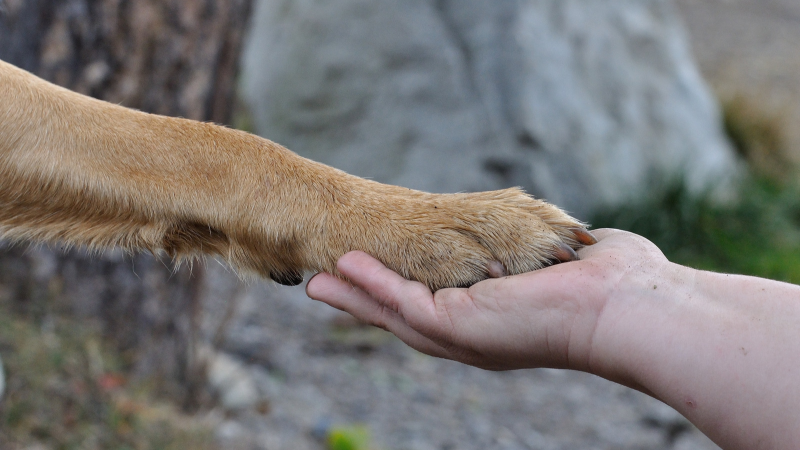
Duke University is reporting the discovery of a new coronavirus variety, discovered in a child diagnosed with pneumonia back in 2018 in Malaysia. According to the evidence available, it appears this new coronavirus made the jump from a dog to infect the child.
Can coronavirus be transmitted from animals to humans?
“How common this virus is, and whether it can be transmitted efficiently from dogs to humans or between humans, nobody knows,” says Gregory Gray, M.D., a professor of medicine, global health, and environmental health at Duke University.
“What’s more important is that these coronaviruses are likely spilling over to humans from animals much more frequently than we know,” Dr. Gray adds. “We are missing them because most hospital diagnostic tests only pick up known human coronaviruses.”
If officially confirmed, this new coronavirus variation would be the eighth unique variety known to cause disease in human beings. While most of those are mild and don’t cause severe symptoms, the implication that animal-to-human coronavirus transmission is accelerating is unsettling.
Dr. Gray is no stranger to coronaviruses or COVID-19. Last year, during the early days of the pandemic, he was part of a team that put together a molecular diagnostic tool capable of identifying and detecting most known coronaviruses (including SARS-CoV-2, the variety that causes COVID-19).
Recent research and results
Gray and his team used the tool once again to analyze and investigate 301 archived pneumonia cases. That process led to the detection of canine coronavirus “signals” emanating from eight patients who had been hospitalized with pneumonia in Sarawak, a region of East Malaysia.
Next, scientists from Ohio State lent a helping hand and grew a coronavirus using samples from one of the clinical specimens. After a methodical and complex genome reconstruction process, researchers were able to conclusively identify the virus as a novel canine coronavirus.
“There are probably multiple canine coronaviruses circulating and spilling over into humans that we don’t know about,” Dr. Gray explains.
Alarming, yes, but the study’s authors stress that the majority of these “crossovers” ultimately yield few medical consequences or considerations for humans.
“Many of those spillovers are dead ends, they don’t ever leave that first human host,” he says.
That said, the potential for another COVID-19 is present. And, if there’s even the slightest chance of another threat like that, it behooves the entire global community to come together and start following these matters more closely.
“But if we really want to mitigate the threat, we need better surveillance where humans and animals intersect, and among people who are sick enough to get hospitalized for novel viruses.”
Why does COVID-19 keep changing?
The topic of where to place the blame for COVID-19 is popping up more and more lately, and while it’s natural for people to look for an answer, the reality is what’s done is done. What is most important now is ensuring nothing on this scale ever happens again.
“These pathogens don’t just cause a pandemic overnight,” Dr. Gray concludes. “It takes many years for them to adapt to the human immune system and cause infection, and then to become efficient in human-to-human transmission. We need to look for these pathogens and detect them early.”
The full study can be found here, published in Clinical Infectious Diseases.