'%3e %3cpath d='M15.9571 0.231934L0.147583 9.39139V32.66L15.9571 41.8195L31.7665 32.66V9.39139L15.9571 0.231934ZM15.9571 33.0172L7.68318 28.2206V13.7798L15.9571 9.00869V23.424L24.2309 28.2206L15.9571 33.0172Z' fill='%23170E30'/%3e %3cpath d='M107.275 23.3727C107.275 22.9645 107.275 22.6073 107.275 22.2756C107.275 21.6377 107.021 20.311 106.766 19.7242C104.628 14.6214 96.3791 15.5144 95.5645 21.3316C94.648 28.0417 102.438 30.9248 106.613 26.2302L104.678 24.929C102.464 26.8936 98.9759 26.5619 98.2885 23.3982H106.384H107.275V23.3727ZM98.2885 21.3826C99.0268 17.9382 103.966 17.7596 104.449 21.3826H98.2885ZM58.472 16.5095C53.9914 15.7441 51.1147 19.1629 51.522 23.4492C51.9802 28.0672 57.8865 30.2614 61.0688 26.766V28.1438H63.9964V16.3309C63.9964 16.3309 61.1706 17.9638 61.0433 18.0403C61.0433 18.0403 59.7959 16.7391 58.472 16.5095ZM57.3264 25.822C53.5077 25.3883 53.5332 19.6987 57.0464 19.1119C62.469 18.1934 62.5963 26.4088 57.3264 25.822ZM126.929 25.4648C126.471 29.5981 118.197 29.3429 116.924 25.6944L119.011 24.4698C119.597 26.1537 122.881 27.1487 123.95 25.6944C125.274 23.9085 121.048 23.4747 120.055 23.092C118.91 22.6328 117.586 21.8419 117.408 20.5151C116.72 15.5655 124.765 14.9786 126.623 18.6781L124.689 19.8263C124.103 18.2954 120.157 17.479 120.284 19.6222C120.361 20.8468 123.517 21.204 124.561 21.6633C126.318 22.4287 127.132 23.4747 126.929 25.4648ZM90.5492 18.2954C87.2142 14.3918 81.3334 16.8667 80.8497 21.7908C80.3151 27.4294 86.5523 30.8993 90.5238 26.6129V28.1438H93.2987V12.1211H90.5238V18.2699L90.5492 18.2954ZM87.7998 25.7965C83.1409 26.5874 82.2499 19.7497 86.4759 19.0864C91.2366 18.3465 92.0003 25.0566 87.7998 25.7965ZM75.8599 18.2954L74.918 17.3004C70.0555 14.3408 65.0657 19.0098 66.4404 24.2402C67.4333 28.0162 72.2958 29.9808 75.3253 27.2253C75.5544 27.0212 75.6053 26.6895 75.8599 26.6129V28.1438H78.6348V12.1211H75.8599V18.2699V18.2954ZM73.1104 25.7965C68.3752 26.4854 67.7897 19.7497 71.8121 19.1119C76.7 18.321 77.311 25.2097 73.1104 25.7965ZM112.392 16.6115H109.465V28.1693H112.392V21.102L115.6 19.2394V16.3054C114.709 16.8156 112.876 17.8872 112.392 18.1679V16.6115ZM42.4335 25.3883H49.969V28.1693H39.353V13.7795H42.4335V25.3883Z' fill='%23170E30'/%3e %3c/g%3e %3cdefs%3e %3cclipPath id='clip0_1_15718'%3e %3crect width='127' height='42' fill='white'/%3e %3c/clipPath%3e %3c/defs%3e %3c/svg%3e)

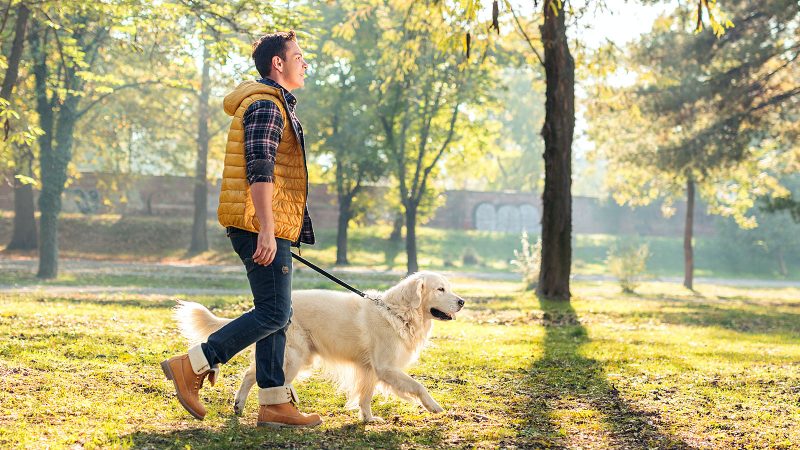
It’s generally understood that walking becomes increasingly important as we age, but the reasons are not always clearly defined. According to researchers at Wake Forest University, older populations that regularly make time for walks not only improve their physical health but also improve markers related to brain function.
Their study, which was published in the journal NeuroImage, determined that walking for 40 minutes at least three times a week can significantly boost one’s memory and overall cognition.
Brisk walking was even found to be more effective than rigorous forms of exercise like dance.
Never too old to boost brain health
Arguably, the most important takeaway from the new study concerns the reversible nature of age-induced brain deterioration.
All of the participants featured in the new study were over the age of 60. Each, although generally healthy, was experiencing various stages of brain shrinkage and tissue scarring.
In order to gauge the depth of cognitive benefits linked with physical activity–specifically walking, the authors assigned the participants into one of three groups: the control group which performed stretching and balance training three times a week, dancers who performed aerobic dances, and the walkers who walked for 40 minutes three times a week. Each group trained for six months.
Although the dancers enjoyed comparable benefits to their physical health as the walkers by the end of the study period, the latter performed better on memory tests.
“The dancers spent some of their time each session watching the instructors and not moving much,” explained corresponding author Agnieszka Burzynska in a recent interview. “That probably affected their results.”
Both the dancers and the walkers enjoyed decreased lesions to their brain tissue and increased white matter volume (an area of the brain important for learning and critical thinking.) Walkers represented the best outcomes on these fronts as well.
This is especially important for the older, otherwise healthy participants involved in the study considering white matter deterioration is associated with cognitive impairment in healthy aging and is an early warning sign of dementia.
Movement of any kind is necessary
The control group evidenced waning health in all of the categories established by the authors. These subjects experienced thinning in regions of the brain that are critical to memory formation. Sedentary behavior additionally accelerates the speed at which brain cells deteriorate.
Decreased cognitive performance is expected with aging but the new study suggests its occurrence can be dramatically slowed with relevant lifestyle changes.
Medical experts recommend seniors 65 and older should try to get at least two and a half hours of moderate aerobic exercise like brisk walking every week. This is equivalent to roughly 30 minutes three days of the week.
If you belong to this demographic you can try and shoot for one hour and 15 minutes of vigorous exercise (such as jogging) each week.