'%3e %3cpath d='M15.9571 0.231934L0.147583 9.39139V32.66L15.9571 41.8195L31.7665 32.66V9.39139L15.9571 0.231934ZM15.9571 33.0172L7.68318 28.2206V13.7798L15.9571 9.00869V23.424L24.2309 28.2206L15.9571 33.0172Z' fill='%23170E30'/%3e %3cpath d='M107.275 23.3727C107.275 22.9645 107.275 22.6073 107.275 22.2756C107.275 21.6377 107.021 20.311 106.766 19.7242C104.628 14.6214 96.3791 15.5144 95.5645 21.3316C94.648 28.0417 102.438 30.9248 106.613 26.2302L104.678 24.929C102.464 26.8936 98.9759 26.5619 98.2885 23.3982H106.384H107.275V23.3727ZM98.2885 21.3826C99.0268 17.9382 103.966 17.7596 104.449 21.3826H98.2885ZM58.472 16.5095C53.9914 15.7441 51.1147 19.1629 51.522 23.4492C51.9802 28.0672 57.8865 30.2614 61.0688 26.766V28.1438H63.9964V16.3309C63.9964 16.3309 61.1706 17.9638 61.0433 18.0403C61.0433 18.0403 59.7959 16.7391 58.472 16.5095ZM57.3264 25.822C53.5077 25.3883 53.5332 19.6987 57.0464 19.1119C62.469 18.1934 62.5963 26.4088 57.3264 25.822ZM126.929 25.4648C126.471 29.5981 118.197 29.3429 116.924 25.6944L119.011 24.4698C119.597 26.1537 122.881 27.1487 123.95 25.6944C125.274 23.9085 121.048 23.4747 120.055 23.092C118.91 22.6328 117.586 21.8419 117.408 20.5151C116.72 15.5655 124.765 14.9786 126.623 18.6781L124.689 19.8263C124.103 18.2954 120.157 17.479 120.284 19.6222C120.361 20.8468 123.517 21.204 124.561 21.6633C126.318 22.4287 127.132 23.4747 126.929 25.4648ZM90.5492 18.2954C87.2142 14.3918 81.3334 16.8667 80.8497 21.7908C80.3151 27.4294 86.5523 30.8993 90.5238 26.6129V28.1438H93.2987V12.1211H90.5238V18.2699L90.5492 18.2954ZM87.7998 25.7965C83.1409 26.5874 82.2499 19.7497 86.4759 19.0864C91.2366 18.3465 92.0003 25.0566 87.7998 25.7965ZM75.8599 18.2954L74.918 17.3004C70.0555 14.3408 65.0657 19.0098 66.4404 24.2402C67.4333 28.0162 72.2958 29.9808 75.3253 27.2253C75.5544 27.0212 75.6053 26.6895 75.8599 26.6129V28.1438H78.6348V12.1211H75.8599V18.2699V18.2954ZM73.1104 25.7965C68.3752 26.4854 67.7897 19.7497 71.8121 19.1119C76.7 18.321 77.311 25.2097 73.1104 25.7965ZM112.392 16.6115H109.465V28.1693H112.392V21.102L115.6 19.2394V16.3054C114.709 16.8156 112.876 17.8872 112.392 18.1679V16.6115ZM42.4335 25.3883H49.969V28.1693H39.353V13.7795H42.4335V25.3883Z' fill='%23170E30'/%3e %3c/g%3e %3cdefs%3e %3cclipPath id='clip0_1_15718'%3e %3crect width='127' height='42' fill='white'/%3e %3c/clipPath%3e %3c/defs%3e %3c/svg%3e)

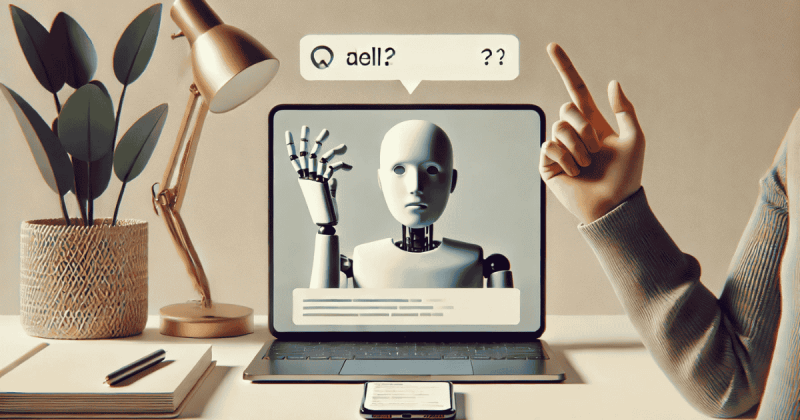
From small start-ups to some of the biggest brands in the world, it feels like every business on the planet nowadays is incorporating AI into its content creation and marketing efforts. The pros are obvious, but new research just conducted at the New York Institute of Technology warns brands of all kinds must be very careful while implementing AI throughout marketing efforts. The wrong approach can backfire among consumers in a big way. Read on to learn more.
Is mixing automation and emotion a good idea?
Researchers set out to better understand how consumers (people) react to emotionally charged marketing content created by AI. Recent developments in generative AI now allow companies to automate the production of entirely unique promotional materials featuring text, images, videos, or audio. The scenes mustered up by these programs may attempt to tug at viewers’ heart strings in any number of ways. For instance, one recent AI-produced Toys “R” Us commercial showed the company’s founder as a young child beside brand mascot Geoffrey the Giraffe.
But do people really connect with emotional content they know was “thought up” by a computer program? That’s the main question researchers set out to answer.
“AI is a new territory for brand marketers, but what we do know is that consumers highly value authentic interactions with brands,” says lead study author Colleen Kirk, D.P.S., professor of marketing and management at New York Institute of Technology, in a media release. “Although more companies are now using AI-generated content to strengthen brand engagement and attachment, no study has explored how consumers view the authenticity of textual content that was created by a robot.”
Kirk, alongside study co-author Julian Givi, Ph.D., a marketing researcher and faculty member at West Virginia University, hypothesized people would tend to view emotionally charged AI-generated content less favorably, negatively influencing their perception of the brand and subsequent desires (if any) to interact with it. To test their theory, researchers put together a number of experiments aimed at examining how the public reacts to AI-written messages containing emotion.
AI plus emotion leads to moral disgust
One experiment asked participants to imagine they had been given a heartfelt message from a fitness salesperson who recently helped them buy a new set of weights. The message generally conveyed that he was inspired by the consumer’s purchase. Here’s the catch: some study subjects believed the message was AI-generated while others believed the salesman drafted it himself (control cohort).
Sure enough, those in the AI cohort reported feeling like the automated note violated their moral principles, evoking feelings of moral disgust. The control group, on the other hand, generally responded favorably to the message.
It’s also important to note that those in the AI cohort were unlikely to recommend the store to others and more likely to switch brands during future shopping trips. Many participants in the AI cohort even rated the store poorly on a simulated reviews site.
AI viewed more positively when it sticks to facts
This research project also uncovered a number of additional interesting and noteworthy findings regarding how people perceive AI-generated content. Let’s take a look:
- AI-generated factual communications (as opposed to communications conveying emotions) were deemed less likely to elicit moral disgust, reduce positive word of mouth, and lower brand loyalty.
- AI-generated messages in which the robot appears self-autonomous (for instance, an AI-generated memo signed by “The Summit Apparel AI Chatbot”) were perceived more positively than AI-generated messages signed by a human company representative.
- When participants believed that most emotional marketing communications were created by AI, they expressed disgust. Meanwhile, the reverse held true when they believed most communications were written by a human. Thus, study authors posit brands may benefit from promoting the human origins of their products and promotions.
- When messaging was simply edited, but not written by AI, content was less penalized for authenticity.
- Human communicators encountered a greater “authenticity penalty” if caught copying emotional content.
AI & emotion: Brands should tread lightly
All in all, study authors believe their work strongly indicates that any company considering AI should carefully decide how to implement automated messaging and communications. They suggest prioritizing authenticity across all consumer interactions. The governments of the world continue to seek stricter regulation of AI disclosure, which means people are only going to become more aware of how brands are utilizing AI in the future.
“Consumers are becoming ever more skeptical of the human origin of marketing communications. Our research provides much-needed insight into how using AI to generate emotional content could negatively impact brands’ perceptions and, in turn, the consumer relationships that support their bottom lines,” Prof. Kirk concludes. “While AI tools offer marketers a new frontier, these professionals should bear in mind a time-tested principle: authenticity is always best.”