'%3e %3cpath d='M15.9571 0.231934L0.147583 9.39139V32.66L15.9571 41.8195L31.7665 32.66V9.39139L15.9571 0.231934ZM15.9571 33.0172L7.68318 28.2206V13.7798L15.9571 9.00869V23.424L24.2309 28.2206L15.9571 33.0172Z' fill='%23170E30'/%3e %3cpath d='M107.275 23.3727C107.275 22.9645 107.275 22.6073 107.275 22.2756C107.275 21.6377 107.021 20.311 106.766 19.7242C104.628 14.6214 96.3791 15.5144 95.5645 21.3316C94.648 28.0417 102.438 30.9248 106.613 26.2302L104.678 24.929C102.464 26.8936 98.9759 26.5619 98.2885 23.3982H106.384H107.275V23.3727ZM98.2885 21.3826C99.0268 17.9382 103.966 17.7596 104.449 21.3826H98.2885ZM58.472 16.5095C53.9914 15.7441 51.1147 19.1629 51.522 23.4492C51.9802 28.0672 57.8865 30.2614 61.0688 26.766V28.1438H63.9964V16.3309C63.9964 16.3309 61.1706 17.9638 61.0433 18.0403C61.0433 18.0403 59.7959 16.7391 58.472 16.5095ZM57.3264 25.822C53.5077 25.3883 53.5332 19.6987 57.0464 19.1119C62.469 18.1934 62.5963 26.4088 57.3264 25.822ZM126.929 25.4648C126.471 29.5981 118.197 29.3429 116.924 25.6944L119.011 24.4698C119.597 26.1537 122.881 27.1487 123.95 25.6944C125.274 23.9085 121.048 23.4747 120.055 23.092C118.91 22.6328 117.586 21.8419 117.408 20.5151C116.72 15.5655 124.765 14.9786 126.623 18.6781L124.689 19.8263C124.103 18.2954 120.157 17.479 120.284 19.6222C120.361 20.8468 123.517 21.204 124.561 21.6633C126.318 22.4287 127.132 23.4747 126.929 25.4648ZM90.5492 18.2954C87.2142 14.3918 81.3334 16.8667 80.8497 21.7908C80.3151 27.4294 86.5523 30.8993 90.5238 26.6129V28.1438H93.2987V12.1211H90.5238V18.2699L90.5492 18.2954ZM87.7998 25.7965C83.1409 26.5874 82.2499 19.7497 86.4759 19.0864C91.2366 18.3465 92.0003 25.0566 87.7998 25.7965ZM75.8599 18.2954L74.918 17.3004C70.0555 14.3408 65.0657 19.0098 66.4404 24.2402C67.4333 28.0162 72.2958 29.9808 75.3253 27.2253C75.5544 27.0212 75.6053 26.6895 75.8599 26.6129V28.1438H78.6348V12.1211H75.8599V18.2699V18.2954ZM73.1104 25.7965C68.3752 26.4854 67.7897 19.7497 71.8121 19.1119C76.7 18.321 77.311 25.2097 73.1104 25.7965ZM112.392 16.6115H109.465V28.1693H112.392V21.102L115.6 19.2394V16.3054C114.709 16.8156 112.876 17.8872 112.392 18.1679V16.6115ZM42.4335 25.3883H49.969V28.1693H39.353V13.7795H42.4335V25.3883Z' fill='%23170E30'/%3e %3c/g%3e %3cdefs%3e %3cclipPath id='clip0_1_15718'%3e %3crect width='127' height='42' fill='white'/%3e %3c/clipPath%3e %3c/defs%3e %3c/svg%3e)

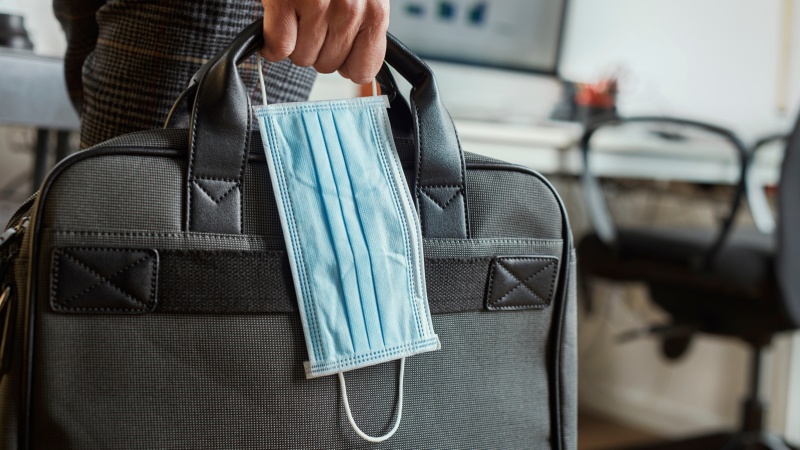
• Companies are now rethinking their return-to-office plans due to the Delta variant.
• Google will delay returning to the office until mid-October.
• Facebook is requiring employees to get vaccinated if they want to work in the office.
Could a countrywide return-to-the-office be on pause due to rising Delta variant cases?
The prospect of workers returning to the office hit a speed bump on Tuesday after the Centers for Disease Control and Prevention advised fully vaccinated people to begin wearing masks in public indoor settings again.
The mask recommendation targets areas with “substantial and high” COVID-19 transmission rates, currently about two-thirds of US counties.
As of now, the CDC said schools — from teachers, staff, students, and visitors — should all wear masks, regardless of vaccination status and community transmission rates.
The rise of the Delta variant, the most dominant strain of COVID in the US, is causing companies, including Google, to rethink their return-to-work strategies.
Google, Facebook and Apple delay returns to the office
Google announced Wednesday that it had postponed its return to the office for most workers until mid-October, weeks after it has previously targeted Sept. 1 as the date.
Most employees at Google will begin to return on Oct. 18, and the plan is to roll out a policy to make sure everyone working is vaccinated once their campuses are fully reopened.
“This extension will allow us time to ramp back into work while providing flexibility for those who need it,” said Google CEO Sundar Pichai in an email.
Google workers will be given a 30-day notice before they are required to return.
While Facebook had already told full-time employees that they could continue working remotely beyond the pandemic, those that hope to return to the office will have to be vaccinated.
The company made an announcement on Wednesday after Google’s call for workers to be vaccinated.
“As our offices reopen, we will be requiring anyone coming to work at any of our US campuses to be vaccinated,” VP of People Lori Goler said in a statement. “How we implement this policy will depend on local conditions and regulations.”
Apple also delayed its reopening, but no date has been set. CEO Tim Cook said the unpredictability of the Delta variant has made a return tough.
“As the last 18 months have demonstrated many times before, progress made is not progress guaranteed. An uneven recovery to the pandemic and the Delta variant surging in many countries around the world have shown us once again that the road to recovery will be a winding one,” he said.
What’s the rush to get back to the office?
Many workers are comfortable working remotely. The majority want to stay at home or have some form of a hybrid schedule moving forward. Companies, on the other hand, are the ones pushing for workers to come back.
Wall Street’s bigwigs were desperate for the return of workers; even Apple CEO Tim Cook said he didn’t envision a remote-work future due to the limits of online collaboration.
But Kate Lister, President of the employer researcher group Global Workplace Analytics, told CNBC that requiring in-person attendance too soon could harm workers’ perception of the office and what purpose it actually serves.
“What if the place looked like a ghost town because so few people returned? Would that lead them to question whether it was worth it?” Lister told the outlet. “If you were coming to the office because you miss your colleagues, would you really get the experience you were looking for?