'%3e %3cpath d='M15.9571 0.231934L0.147583 9.39139V32.66L15.9571 41.8195L31.7665 32.66V9.39139L15.9571 0.231934ZM15.9571 33.0172L7.68318 28.2206V13.7798L15.9571 9.00869V23.424L24.2309 28.2206L15.9571 33.0172Z' fill='%23170E30'/%3e %3cpath d='M107.275 23.3727C107.275 22.9645 107.275 22.6073 107.275 22.2756C107.275 21.6377 107.021 20.311 106.766 19.7242C104.628 14.6214 96.3791 15.5144 95.5645 21.3316C94.648 28.0417 102.438 30.9248 106.613 26.2302L104.678 24.929C102.464 26.8936 98.9759 26.5619 98.2885 23.3982H106.384H107.275V23.3727ZM98.2885 21.3826C99.0268 17.9382 103.966 17.7596 104.449 21.3826H98.2885ZM58.472 16.5095C53.9914 15.7441 51.1147 19.1629 51.522 23.4492C51.9802 28.0672 57.8865 30.2614 61.0688 26.766V28.1438H63.9964V16.3309C63.9964 16.3309 61.1706 17.9638 61.0433 18.0403C61.0433 18.0403 59.7959 16.7391 58.472 16.5095ZM57.3264 25.822C53.5077 25.3883 53.5332 19.6987 57.0464 19.1119C62.469 18.1934 62.5963 26.4088 57.3264 25.822ZM126.929 25.4648C126.471 29.5981 118.197 29.3429 116.924 25.6944L119.011 24.4698C119.597 26.1537 122.881 27.1487 123.95 25.6944C125.274 23.9085 121.048 23.4747 120.055 23.092C118.91 22.6328 117.586 21.8419 117.408 20.5151C116.72 15.5655 124.765 14.9786 126.623 18.6781L124.689 19.8263C124.103 18.2954 120.157 17.479 120.284 19.6222C120.361 20.8468 123.517 21.204 124.561 21.6633C126.318 22.4287 127.132 23.4747 126.929 25.4648ZM90.5492 18.2954C87.2142 14.3918 81.3334 16.8667 80.8497 21.7908C80.3151 27.4294 86.5523 30.8993 90.5238 26.6129V28.1438H93.2987V12.1211H90.5238V18.2699L90.5492 18.2954ZM87.7998 25.7965C83.1409 26.5874 82.2499 19.7497 86.4759 19.0864C91.2366 18.3465 92.0003 25.0566 87.7998 25.7965ZM75.8599 18.2954L74.918 17.3004C70.0555 14.3408 65.0657 19.0098 66.4404 24.2402C67.4333 28.0162 72.2958 29.9808 75.3253 27.2253C75.5544 27.0212 75.6053 26.6895 75.8599 26.6129V28.1438H78.6348V12.1211H75.8599V18.2699V18.2954ZM73.1104 25.7965C68.3752 26.4854 67.7897 19.7497 71.8121 19.1119C76.7 18.321 77.311 25.2097 73.1104 25.7965ZM112.392 16.6115H109.465V28.1693H112.392V21.102L115.6 19.2394V16.3054C114.709 16.8156 112.876 17.8872 112.392 18.1679V16.6115ZM42.4335 25.3883H49.969V28.1693H39.353V13.7795H42.4335V25.3883Z' fill='%23170E30'/%3e %3c/g%3e %3cdefs%3e %3cclipPath id='clip0_1_15718'%3e %3crect width='127' height='42' fill='white'/%3e %3c/clipPath%3e %3c/defs%3e %3c/svg%3e)

Parkinson’s disease — a chronic neurological condition that critically impairs a patient’s motor function over time — is fairly common in the US. More than 60,000Americans are affected every year and there is no cure.
According to a new study published in the Jama Neurology journal, people who live near busy roads have a higher chance of developing Parkinson’s.
The connection between Parkinson’s and air pollution
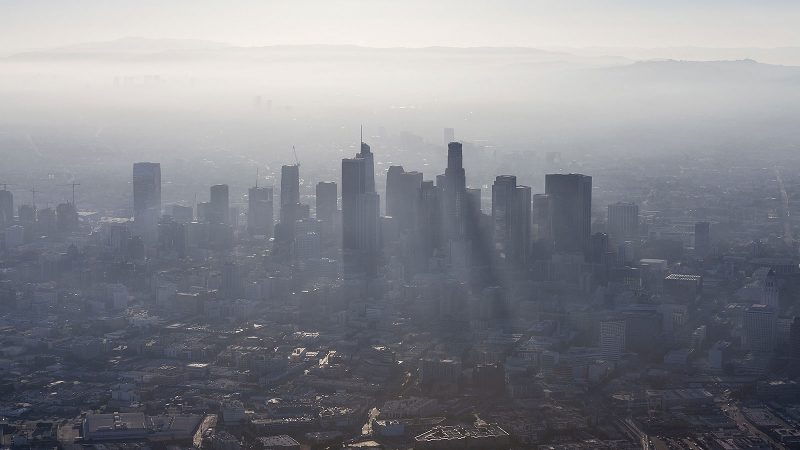
The reasoning primarily concerns air pollutants. The authors claim that people who are habitually exposed to toxic particles are nearly 1.5 times more likely to develop Parkinson’s than those who are not exposed.
The researchers posit that air pollutants pass through the bloodstream into the brain and subsequently alter chemical processes important to neurological health.
“This finding suggests the role of air pollutants in PD development, advocating for the need to implement a targeted public health policy,” the authors wrote in the new report.
Why Parkinson’s may be on the rise and what you need to know
Recent studies have suggested that the prevalence of PD has increased by more than 50% in the span of five years among younger adults living in the US.
The latest report on Parkinson’s exposure risk identifies environmental pollutants (pesticides, air pollution, etc.) as highly influential. It found that greenhouse gases like nitrogen dioxide (NO2) appeared to produce the most adverse effects.
In order to gauge how routine exposure to greenhouse gases affects Parkinson’s risk, the authors tracked 78,830 participants over the age of 40 in South Korea for 10 years. Smog exposure was calculated for each residential address at two five-year intervals.
By the end of the study period, 338 of the men and women involved in the analysis were diagnosed with PD.
Even after adjusting for other relevant factors, people living in the most smog-affected regions were roughly 41% more likely to develop PD compared to the rest of the study group.
This stands to reason considering car engines produce a significant amount of greenhouse gas, specifically NO2 which is 300 times more toxic than carbon monoxide.
“Air pollution is a significant public health hazard. More than 80 percent of urban area residents are exposed to levels that exceed limits set by the World Health Organization,” the authors continued.
How to limit your exposure to air toxins
The World Health Organization reports that more than 80% of communities occupying urban areas are regularly exposed to pollution levels that exceed amounts considered hazardous.
If you live in a heavily polluted area, health systems recommend reducing outdoor air infiltration to indoors when you can, cleaning indoor air with air filters, and staying indoors on high air-pollution days. You can access specific pollution data via AirNow.gov.