'%3e %3cpath d='M15.9571 0.231934L0.147583 9.39139V32.66L15.9571 41.8195L31.7665 32.66V9.39139L15.9571 0.231934ZM15.9571 33.0172L7.68318 28.2206V13.7798L15.9571 9.00869V23.424L24.2309 28.2206L15.9571 33.0172Z' fill='%23170E30'/%3e %3cpath d='M107.275 23.3727C107.275 22.9645 107.275 22.6073 107.275 22.2756C107.275 21.6377 107.021 20.311 106.766 19.7242C104.628 14.6214 96.3791 15.5144 95.5645 21.3316C94.648 28.0417 102.438 30.9248 106.613 26.2302L104.678 24.929C102.464 26.8936 98.9759 26.5619 98.2885 23.3982H106.384H107.275V23.3727ZM98.2885 21.3826C99.0268 17.9382 103.966 17.7596 104.449 21.3826H98.2885ZM58.472 16.5095C53.9914 15.7441 51.1147 19.1629 51.522 23.4492C51.9802 28.0672 57.8865 30.2614 61.0688 26.766V28.1438H63.9964V16.3309C63.9964 16.3309 61.1706 17.9638 61.0433 18.0403C61.0433 18.0403 59.7959 16.7391 58.472 16.5095ZM57.3264 25.822C53.5077 25.3883 53.5332 19.6987 57.0464 19.1119C62.469 18.1934 62.5963 26.4088 57.3264 25.822ZM126.929 25.4648C126.471 29.5981 118.197 29.3429 116.924 25.6944L119.011 24.4698C119.597 26.1537 122.881 27.1487 123.95 25.6944C125.274 23.9085 121.048 23.4747 120.055 23.092C118.91 22.6328 117.586 21.8419 117.408 20.5151C116.72 15.5655 124.765 14.9786 126.623 18.6781L124.689 19.8263C124.103 18.2954 120.157 17.479 120.284 19.6222C120.361 20.8468 123.517 21.204 124.561 21.6633C126.318 22.4287 127.132 23.4747 126.929 25.4648ZM90.5492 18.2954C87.2142 14.3918 81.3334 16.8667 80.8497 21.7908C80.3151 27.4294 86.5523 30.8993 90.5238 26.6129V28.1438H93.2987V12.1211H90.5238V18.2699L90.5492 18.2954ZM87.7998 25.7965C83.1409 26.5874 82.2499 19.7497 86.4759 19.0864C91.2366 18.3465 92.0003 25.0566 87.7998 25.7965ZM75.8599 18.2954L74.918 17.3004C70.0555 14.3408 65.0657 19.0098 66.4404 24.2402C67.4333 28.0162 72.2958 29.9808 75.3253 27.2253C75.5544 27.0212 75.6053 26.6895 75.8599 26.6129V28.1438H78.6348V12.1211H75.8599V18.2699V18.2954ZM73.1104 25.7965C68.3752 26.4854 67.7897 19.7497 71.8121 19.1119C76.7 18.321 77.311 25.2097 73.1104 25.7965ZM112.392 16.6115H109.465V28.1693H112.392V21.102L115.6 19.2394V16.3054C114.709 16.8156 112.876 17.8872 112.392 18.1679V16.6115ZM42.4335 25.3883H49.969V28.1693H39.353V13.7795H42.4335V25.3883Z' fill='%23170E30'/%3e %3c/g%3e %3cdefs%3e %3cclipPath id='clip0_1_15718'%3e %3crect width='127' height='42' fill='white'/%3e %3c/clipPath%3e %3c/defs%3e %3c/svg%3e)

Despite all of the technological innovations in the job market, one thing is still missing: a simple way for job candidates — and employers — to verify all the degrees and licenses that appear on a resume.
A solution, currently known as digital passports, is on the way.
The challenge: proving candidates earned the credentials they list
A report in Forbes notes that there are 1 million confirmed credentials alone in the U.S., with millions more across the globe. It’s not uncommon for someone to hold multiple college degrees, several licenses, and even multiple apprenticeships.
At the same time, employers and government agencies have never possessed a speedy, secure, and efficient tool that shines a light on professional credentials.
That’s where digital passports come in. They’re not getting a ton of ink — at least not yet — as vaccine passports dominate the headlines, but they exist.
“Digital passports come in many forms,” said Amy Trautman, head of business operations at Resourceful Compliance, a labor law compliance service firm in Malvern, Pennsylvania. “They help people store their skills and history in an easily accessible digital form that allows AI to better pick out applicants for jobs from a list.”
One of them is already backed by major corporate brands including Google, Microsoft, JPMorgan, and Walmart. They’ve banded together to fund a digital-passport platform called Credential Engine, a cloud-based site that stores and provides private-access diplomas, apprenticeships, Ph.Ds, certificates, and licenses, among other credentials.
“We envision a future where millions of people worldwide have access to information about credentials that opens their eyes to the full range of opportunities for learning, advancement, and meaningful careers,” Credential Engine says on its website.
The solution also tracks new achievements as they happen
Giving employers a genuine, constantly updated account of a job applicant’s pedigree helps on three fronts: First, a verified digital passport gives a true account rather than a potentially fabricated history on an applicant’s regular resume. Second, it’s good for tracking skills and life achievements earned from high school onward, with passport holders able to add credentials like scholarships, accredited courses, training modules, and business certification titles. Finally, they can include personal information like criminal records, credit scores, and updated driver’s licenses for employers to see.
“Accuracy and authenticity have always been one of the major problems most companies are facing, especially when it comes to hiring,” said Israel Gaudette, founder of Link Tracker Pro, a Canada-based software-as-a-service (or SaaS) company. “Now that remote work is on the rise, the authenticity dilemma has risen to the next level. This is where a digital passport comes in. As an employer, I know that for better filtration of applicants, a digital passport is crucial.”
As an employer, Gaudette says filtering job seekers through a digital passport will make the hiring process much easier and much faster.
“Without asking the help of third-party background checkers, employers can now have the power of verifying any job hunter’s credentials,” Gaudette said. “I have a hard time verifying all the things written in a job seeker’s resume like work history, education, references, licenses and even their true identity. A digital passport can be an answer to all of these dilemmas. Not only will it fine-tune how job hunters show their true credentials, with less vetting, it will speed up the hiring process as well.”
What to store on a digital passport
Technology experts say that career-minded individuals can begin building their digital passport as early as high school. For instance, a teenager could log grades, Advancement Placement scores, volunteer work, titles like class president or captain of the hockey team, and part-time jobs on a digital passport. A digital passport also gives users an online cover letter they can expand on in college and throughout their professional careers.
All credentials are verified by the people already instrumental in a job seeker’s life, such as teachers and professors, employers and nonprofit professionals, coaches and mentors, government licensing agencies, and high schools and colleges.
A digital passport can also include COVID-19 vaccine credentials.
“A vaccine passport enables privacy-preserved tracking of vaccinations and health records, allowing people and organizations to reliably present health-based proofs with ultimate confidentiality, which may be essential in jobs where frequent public contact is necessary,” said Ben Kiunisala, head of customer engagement at TrustGrid, a SaaS provider that enables government, enterprises, and organizations to create secure digital ecosystems anywhere in the world.
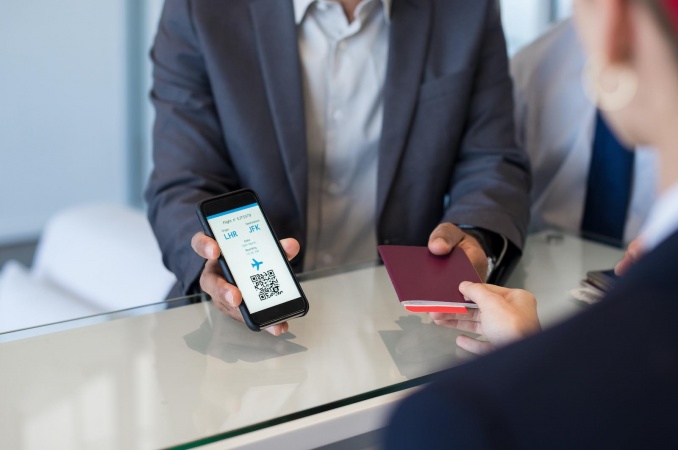
TrustGrid’s digital passport ecosystem enables individuals who receive the vaccine to opt into the company’s database after the vaccine is administered, receiving a QR code that is stored on their smartphone. That code is permanent proof the holder’s been vaccinated for COVID.
Slow, inevitable growth, but nothing for consumers yet
Digital passports are just beginning to pop up across the globe but should pick up speed.
“There are already versions of digital passports like [in] Portugal that allow you to verify specific skills,” said Stephan Baldwin, founder of Assisted Living Center, a company providing information on and marketing services to over 19,000 senior communities across the U.S.
However, digital passport companies will have to navigate challenges in rolling their products out, because passports need to be accessible to everyone for them to work.
“Otherwise, it would be unfair, which could challenge the idea of equal employment,” Baldwin said. “However, from a human resources perspective, their implementation would expedite hiring or vetting processes with candidates, because background checks and such practices would become more straightforward.”