'%3e %3cpath d='M15.9571 0.231934L0.147583 9.39139V32.66L15.9571 41.8195L31.7665 32.66V9.39139L15.9571 0.231934ZM15.9571 33.0172L7.68318 28.2206V13.7798L15.9571 9.00869V23.424L24.2309 28.2206L15.9571 33.0172Z' fill='%23170E30'/%3e %3cpath d='M107.275 23.3727C107.275 22.9645 107.275 22.6073 107.275 22.2756C107.275 21.6377 107.021 20.311 106.766 19.7242C104.628 14.6214 96.3791 15.5144 95.5645 21.3316C94.648 28.0417 102.438 30.9248 106.613 26.2302L104.678 24.929C102.464 26.8936 98.9759 26.5619 98.2885 23.3982H106.384H107.275V23.3727ZM98.2885 21.3826C99.0268 17.9382 103.966 17.7596 104.449 21.3826H98.2885ZM58.472 16.5095C53.9914 15.7441 51.1147 19.1629 51.522 23.4492C51.9802 28.0672 57.8865 30.2614 61.0688 26.766V28.1438H63.9964V16.3309C63.9964 16.3309 61.1706 17.9638 61.0433 18.0403C61.0433 18.0403 59.7959 16.7391 58.472 16.5095ZM57.3264 25.822C53.5077 25.3883 53.5332 19.6987 57.0464 19.1119C62.469 18.1934 62.5963 26.4088 57.3264 25.822ZM126.929 25.4648C126.471 29.5981 118.197 29.3429 116.924 25.6944L119.011 24.4698C119.597 26.1537 122.881 27.1487 123.95 25.6944C125.274 23.9085 121.048 23.4747 120.055 23.092C118.91 22.6328 117.586 21.8419 117.408 20.5151C116.72 15.5655 124.765 14.9786 126.623 18.6781L124.689 19.8263C124.103 18.2954 120.157 17.479 120.284 19.6222C120.361 20.8468 123.517 21.204 124.561 21.6633C126.318 22.4287 127.132 23.4747 126.929 25.4648ZM90.5492 18.2954C87.2142 14.3918 81.3334 16.8667 80.8497 21.7908C80.3151 27.4294 86.5523 30.8993 90.5238 26.6129V28.1438H93.2987V12.1211H90.5238V18.2699L90.5492 18.2954ZM87.7998 25.7965C83.1409 26.5874 82.2499 19.7497 86.4759 19.0864C91.2366 18.3465 92.0003 25.0566 87.7998 25.7965ZM75.8599 18.2954L74.918 17.3004C70.0555 14.3408 65.0657 19.0098 66.4404 24.2402C67.4333 28.0162 72.2958 29.9808 75.3253 27.2253C75.5544 27.0212 75.6053 26.6895 75.8599 26.6129V28.1438H78.6348V12.1211H75.8599V18.2699V18.2954ZM73.1104 25.7965C68.3752 26.4854 67.7897 19.7497 71.8121 19.1119C76.7 18.321 77.311 25.2097 73.1104 25.7965ZM112.392 16.6115H109.465V28.1693H112.392V21.102L115.6 19.2394V16.3054C114.709 16.8156 112.876 17.8872 112.392 18.1679V16.6115ZM42.4335 25.3883H49.969V28.1693H39.353V13.7795H42.4335V25.3883Z' fill='%23170E30'/%3e %3c/g%3e %3cdefs%3e %3cclipPath id='clip0_1_15718'%3e %3crect width='127' height='42' fill='white'/%3e %3c/clipPath%3e %3c/defs%3e %3c/svg%3e)

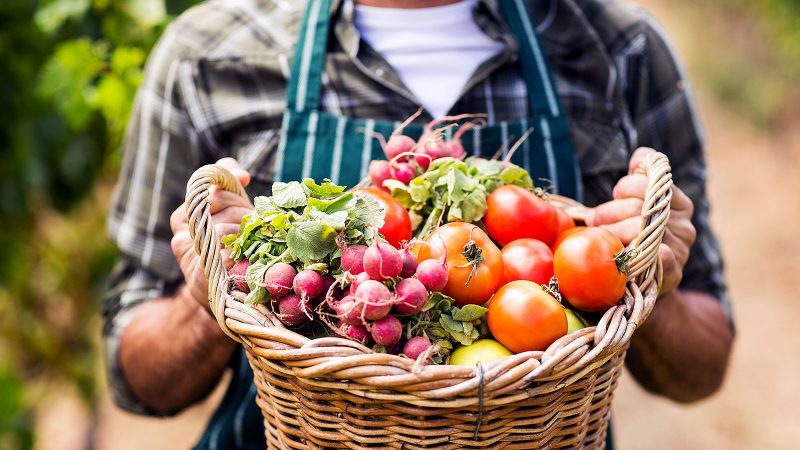
What do coffee and salad have in common? According to a new study published last month in the academic journal Nutrients, coffee consumption and eating vegetables as part of a balanced healthy diet may offer additional protection against COVID-19.
The study was conducted by the Department of Preventive Medicine at the Feinberg School of Medicine at Northwestern University. It examined dietary data from participants of the UK Biobank from March 16, 2020, to Nov. 30, 2020.
The study was based on a questionnaire that asked participants how much they ate or drank when it came to cooked and raw vegetables, fresh and dried fruit, fish, red meats like beef or pork, and tea and coffee. What they found was that the 37,988 participants who had tested positive for COVID-19 may have followed patterns that affected both whether they got sick and how sick they got with coronavirus.
“A person’s nutrition impacts immunity, and the immune system plays a key role in an individual’s susceptibility and response to infectious diseases, including COVID-19,” said Marilyn Cornelis, associate professor of preventive medicine at the Northwestern University and a senior author of the study.
Coffee, veggies, and breast milk
So what does this mean for you? The study found that having one or more cups of coffee per day, compared to having less than one cup a day, was associated with a roughly 10% decreased risk of contracting COVID-19.
The Mayo Clinic, however, recommends drinking no more than four cups a day. Caffeine has been linked to bad health effects including high blood pressure.
The Northwestern University study also found that the consumption of around 0.67 servings per day of vegetables could also lower the risk of COVID-19, which is less than what the American Heart Association recommends for daily intake. This factor seemed to be paired with a reduced intake of meat in participants.
However, the study also found that “red meat consumption presented no risk, suggesting meat per se does not underlie the association we observed with processed meats.” In addition to these results, the study also found that participants who had been breastfed as babies had a 10% reduced risk of contracting COVID-19.
Of course, a healthy diet is not a substitute for vaccination, which the Centers for Disease Control and Prevention say is the most effective and proven way to prevent COVID-19 infections resulting in severe illness and death.
Inherent biases
It should be noted that the study used body-mass index as one of the factors in their analysis sample, which is an inaccurate and often misleading means of categorizing the fat-to-muscle ratio in individuals. It also identified a socioeconomic factor that was not elaborated on within the body of the study.
One of those factors is the fact that better-educated, employed, and white participants generally have better access to fresh vegetables, coffee, and better healthcare. Those identified as nonwhite, on other hand, had higher BMI levels, ate more red meat, and were in generally poorer health. The United Kingdom has been accused of having inequitable healthcare access, which in itself has been a field of study in recent years.
“Before relying on the results of a study, you should validate their results by identifying if a bias exists with how it was conducted, what it measured, what flaws or drawbacks exist from the methodology used, and more,” says Dr. Lily Adelzadeh, a board-certified dermatologist in Pleasanton, California.
The study also utilized a relatively small participant pool, isolated to England, so the study may not be applicable globally or might come up with unexpected, counterintuitive results. For example, Northwestern University’s study concluded that the “consumption of broccoli surprisingly increased COVID-19 mortality.”
“While a healthy and balanced lifestyle is important to boost your immune system and stave off any disease, you cannot rely on diet changes alone to offer protection from contracting a communicable disease,” said Dr. Sanjana Vig, an anesthesiologist and writer at The Female Professional. “It’s still important to visit your doctor for medical advice and to take care of any underlying conditions you already have”.