'%3e %3cpath d='M15.9571 0.231934L0.147583 9.39139V32.66L15.9571 41.8195L31.7665 32.66V9.39139L15.9571 0.231934ZM15.9571 33.0172L7.68318 28.2206V13.7798L15.9571 9.00869V23.424L24.2309 28.2206L15.9571 33.0172Z' fill='%23170E30'/%3e %3cpath d='M107.275 23.3727C107.275 22.9645 107.275 22.6073 107.275 22.2756C107.275 21.6377 107.021 20.311 106.766 19.7242C104.628 14.6214 96.3791 15.5144 95.5645 21.3316C94.648 28.0417 102.438 30.9248 106.613 26.2302L104.678 24.929C102.464 26.8936 98.9759 26.5619 98.2885 23.3982H106.384H107.275V23.3727ZM98.2885 21.3826C99.0268 17.9382 103.966 17.7596 104.449 21.3826H98.2885ZM58.472 16.5095C53.9914 15.7441 51.1147 19.1629 51.522 23.4492C51.9802 28.0672 57.8865 30.2614 61.0688 26.766V28.1438H63.9964V16.3309C63.9964 16.3309 61.1706 17.9638 61.0433 18.0403C61.0433 18.0403 59.7959 16.7391 58.472 16.5095ZM57.3264 25.822C53.5077 25.3883 53.5332 19.6987 57.0464 19.1119C62.469 18.1934 62.5963 26.4088 57.3264 25.822ZM126.929 25.4648C126.471 29.5981 118.197 29.3429 116.924 25.6944L119.011 24.4698C119.597 26.1537 122.881 27.1487 123.95 25.6944C125.274 23.9085 121.048 23.4747 120.055 23.092C118.91 22.6328 117.586 21.8419 117.408 20.5151C116.72 15.5655 124.765 14.9786 126.623 18.6781L124.689 19.8263C124.103 18.2954 120.157 17.479 120.284 19.6222C120.361 20.8468 123.517 21.204 124.561 21.6633C126.318 22.4287 127.132 23.4747 126.929 25.4648ZM90.5492 18.2954C87.2142 14.3918 81.3334 16.8667 80.8497 21.7908C80.3151 27.4294 86.5523 30.8993 90.5238 26.6129V28.1438H93.2987V12.1211H90.5238V18.2699L90.5492 18.2954ZM87.7998 25.7965C83.1409 26.5874 82.2499 19.7497 86.4759 19.0864C91.2366 18.3465 92.0003 25.0566 87.7998 25.7965ZM75.8599 18.2954L74.918 17.3004C70.0555 14.3408 65.0657 19.0098 66.4404 24.2402C67.4333 28.0162 72.2958 29.9808 75.3253 27.2253C75.5544 27.0212 75.6053 26.6895 75.8599 26.6129V28.1438H78.6348V12.1211H75.8599V18.2699V18.2954ZM73.1104 25.7965C68.3752 26.4854 67.7897 19.7497 71.8121 19.1119C76.7 18.321 77.311 25.2097 73.1104 25.7965ZM112.392 16.6115H109.465V28.1693H112.392V21.102L115.6 19.2394V16.3054C114.709 16.8156 112.876 17.8872 112.392 18.1679V16.6115ZM42.4335 25.3883H49.969V28.1693H39.353V13.7795H42.4335V25.3883Z' fill='%23170E30'/%3e %3c/g%3e %3cdefs%3e %3cclipPath id='clip0_1_15718'%3e %3crect width='127' height='42' fill='white'/%3e %3c/clipPath%3e %3c/defs%3e %3c/svg%3e)

• Recent studies found that erratic driving and not paying bills on time could both be early signs of dementia.
• People started missing payments six years before a clinical diagnosis.
• Other signs of dementia include memory loss and trouble problem-solving.
The problen with some of the warning signs of dementia is that they may be mistaken for aging, which makes it difficult to detect the condition early on. But what if there were ways to at least detect possible dementia through public records? Researchers investigating the options have discovered that two behavior patterns fit the bill: erratic driving and plunging credit scores.
The New York Times reported that experiments are underway with just this hypothesis — to see if dementia could be found years or decades before it fully develops. This is especially important given that young people are more prone to developing dementia than previously thought, and it’s estimated that the total number of cases globally will triple to 152.8 million in 2050.
Your driving changes
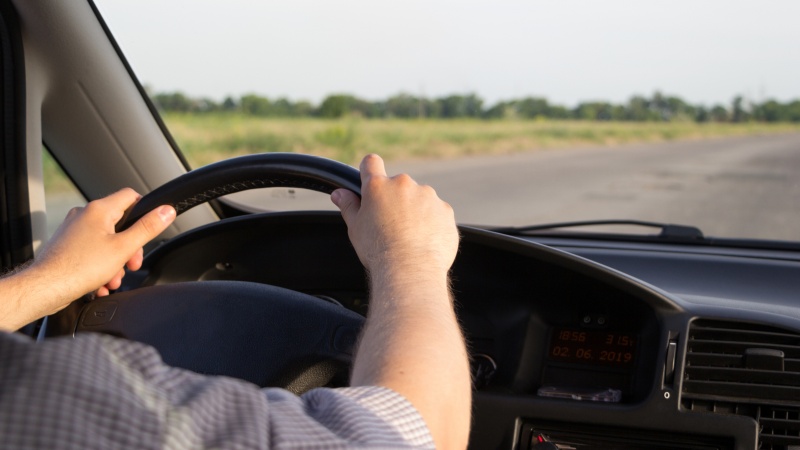
In one study, researchers said that GPS tracking may serve as an early warning for Alzheimer’s disease. The research, published in the journal Alzheimer’s Research and Therapy, included the use of GPS devices and machine learning as “digital biomarkers” to look at the driving habits of people with preclinical Alzheimer’s and a control group of regular drivers.
Researchers measured things like how often they accelerated or braked aggressively, their response to speed limits, and other measures like driving at night and the number of trips taken within a specific timeframe. Through these measures, researchers said that driving behavior and age could detect preclinical Alzheimer’s with 88% accuracy.
They also found a pattern in drivers among the preclinical Alzheimer’s group. There was a tendency to take shorter trips while avoiding driving at night, in addition to driving too slowly and sticking to routes they travel often.
You start to miss payments
Forgetting to make a credit-card payment happens from time to time, but it’s more common in Medicare beneficiaries who go on to be diagnosed with dementia, according to one study.
Researchers from the John Hopkins University Bloomberg School of Public Health found that people on Medicare who eventually were diagnosed with dementia were more likely to miss payments on bills as early as six years before a clinical diagnosis.
These missed payments also affected credit scores; researchers said that the financial pitfalls also increased the risk of developing worsening credit scores nearly three years before a dementia diagnosis.
“Dementia was the only medical condition where we saw consistent financial symptoms, especially the long period of deteriorating outcomes before clinical recognition,” one researcher said. “Our study is the first to provide large-scale quantitative evidence of the medical adage that the first place to look for dementia is in the checkbook.”