'%3e %3cpath d='M15.9571 0.231934L0.147583 9.39139V32.66L15.9571 41.8195L31.7665 32.66V9.39139L15.9571 0.231934ZM15.9571 33.0172L7.68318 28.2206V13.7798L15.9571 9.00869V23.424L24.2309 28.2206L15.9571 33.0172Z' fill='%23170E30'/%3e %3cpath d='M107.275 23.3727C107.275 22.9645 107.275 22.6073 107.275 22.2756C107.275 21.6377 107.021 20.311 106.766 19.7242C104.628 14.6214 96.3791 15.5144 95.5645 21.3316C94.648 28.0417 102.438 30.9248 106.613 26.2302L104.678 24.929C102.464 26.8936 98.9759 26.5619 98.2885 23.3982H106.384H107.275V23.3727ZM98.2885 21.3826C99.0268 17.9382 103.966 17.7596 104.449 21.3826H98.2885ZM58.472 16.5095C53.9914 15.7441 51.1147 19.1629 51.522 23.4492C51.9802 28.0672 57.8865 30.2614 61.0688 26.766V28.1438H63.9964V16.3309C63.9964 16.3309 61.1706 17.9638 61.0433 18.0403C61.0433 18.0403 59.7959 16.7391 58.472 16.5095ZM57.3264 25.822C53.5077 25.3883 53.5332 19.6987 57.0464 19.1119C62.469 18.1934 62.5963 26.4088 57.3264 25.822ZM126.929 25.4648C126.471 29.5981 118.197 29.3429 116.924 25.6944L119.011 24.4698C119.597 26.1537 122.881 27.1487 123.95 25.6944C125.274 23.9085 121.048 23.4747 120.055 23.092C118.91 22.6328 117.586 21.8419 117.408 20.5151C116.72 15.5655 124.765 14.9786 126.623 18.6781L124.689 19.8263C124.103 18.2954 120.157 17.479 120.284 19.6222C120.361 20.8468 123.517 21.204 124.561 21.6633C126.318 22.4287 127.132 23.4747 126.929 25.4648ZM90.5492 18.2954C87.2142 14.3918 81.3334 16.8667 80.8497 21.7908C80.3151 27.4294 86.5523 30.8993 90.5238 26.6129V28.1438H93.2987V12.1211H90.5238V18.2699L90.5492 18.2954ZM87.7998 25.7965C83.1409 26.5874 82.2499 19.7497 86.4759 19.0864C91.2366 18.3465 92.0003 25.0566 87.7998 25.7965ZM75.8599 18.2954L74.918 17.3004C70.0555 14.3408 65.0657 19.0098 66.4404 24.2402C67.4333 28.0162 72.2958 29.9808 75.3253 27.2253C75.5544 27.0212 75.6053 26.6895 75.8599 26.6129V28.1438H78.6348V12.1211H75.8599V18.2699V18.2954ZM73.1104 25.7965C68.3752 26.4854 67.7897 19.7497 71.8121 19.1119C76.7 18.321 77.311 25.2097 73.1104 25.7965ZM112.392 16.6115H109.465V28.1693H112.392V21.102L115.6 19.2394V16.3054C114.709 16.8156 112.876 17.8872 112.392 18.1679V16.6115ZM42.4335 25.3883H49.969V28.1693H39.353V13.7795H42.4335V25.3883Z' fill='%23170E30'/%3e %3c/g%3e %3cdefs%3e %3cclipPath id='clip0_1_15718'%3e %3crect width='127' height='42' fill='white'/%3e %3c/clipPath%3e %3c/defs%3e %3c/svg%3e)

While it was technically unveiled at the tail end of 2022, the ChatGPT AI chatbot has absolutely dominated tech and business headlines this year. So much so that it wouldn’t be an exaggeration at all to call 2023 the year artificial intelligence finally flipped from the stuff of science fiction and the distant future into a legitimate asset humans can make use of today.
Indeed, the future crept up on all of us while we were preoccupied with a pandemic, and now it seems we’ve already entered the age of automation. ChatGPT’s unbelievable capacity to produce unique responses and logical, largely readable content within mere seconds in response to written prompts is an undeniably fantastic feat of modern technology. That being said, the meteoric and rapid adoption of AI in recent months has left many human professionals wondering if their jobs, and perhaps even entire careers, have suddenly become redundant.
Copywriting: A career choice in danger of extinction?
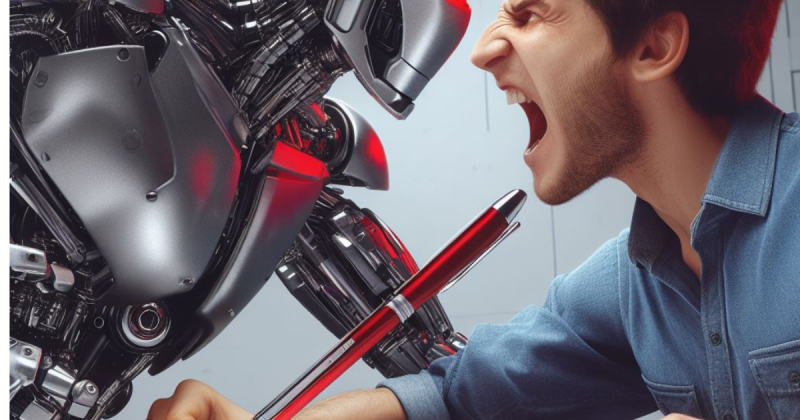
Chief among concerned career paths is the copywriting industry. If ChatGPT can create articles on virtually anything within mere moments for free, where does that leave human writers who will need at least a few hours and monetary compensation to produce an article on the same topic?
Copywriters’ fears in regards to the rise of AI chatbots are absolutely valid to a certain extent, but before we dive into why copywriting will almost certainly remain a human-dominated domain in the years to come, let’s talk about exactly what a copywriter does in the first place. Copywriters, generally, work to produce written content that targets a specific audience or group of consumers. In most cases, the content is intended for either marketing or promotional purposes.
The verbiage and messaging seen in marketing emails, online blogs, press releases, and TV/online ads are usually written by copywriters. Put another way, a great copywriter knows how to lend a consistent “voice” to their company. Copywriters familiarize themselves with their company’s identity, and then work to ensure written content across all of its channels remain consistent with that branding.
AI is convenient, but lacks creativity
Now that we’ve established the role of a copywriter, that brings us to our next nagging question. Can AI really produce content just as compelling as a human copywriter? All indicators point to the same conclusion: No! ChatGPT may be great at quickly putting together coherent responses to questions, but AI chat bots still miss the mark by a wide margin when it comes to understanding human writing as opposed to simply mimicking it.
While an average piece of content written by a human copywriter probably isn’t going to hold a candle to Whitman or Poe, even branded written content intended largely for promotional materials require a certain amount of subtlety. And, while AI algorithms like ChatGPT are clearly capable of producing unique content, such programs still have a very long way to go when it comes to actually writing in a way that appeals to the human condition and perceptions. AI can pull endless information from the world wide web, but none of that data will supply the same level of empathy, creativity, and warmth a human writer can sprinkle into their work.
Meanwhile, another key aspect of copywriting in which AI falls short is humor. Consider for a moment how many of your favorite products or companies have used sarcasm or humor in their branding, commercials, etc. Humor is a major aspect of appealing to consumers of all kinds, but current AI models still aren’t capable of grasping the nuances of human humor. A recent study conducted at Cornell University asked AI models to choose the right captions for various New Yorker cartoons and explain why the scenarios were funny, but the algorithms struggled mightily to grasp the humorous scenes.
AI as a copywriting asset
It’s natural for copywriters, and any number of other professionals working in fields like graphic design or customer service, to be wary of AI and the effect it may have on their job prospects in the future. While no one can predict what will happen decades down the line, AI is much more of an asset for copywriters than a threat nowadays.
Relying on ChatGPT to produce content totally on its own would be a big mistake. It’s been well documented that ChatGPT often makes errors and produces inaccurate or flatout misleading content. Content written by AI should absolutely always be reviewed and edited by a pair of human eyes.
That being said, there’s no reason copywriters can’t take advantage of chatbots to make their working lives a little easier. ChatGPT and other AI programs can help copywriters perform relevant topic research, sculpt rough first drafts, and perform data analyses focusing on targeted audiences. Alternatively, a copywriter may want to use AI to help with more straightforward tasks like creating headlines or producing product descriptions. This approach frees up the human writer to focus on content that requires more nuance.
Rumors of copywriting’s demise have been greatly exaggerated. If anything, the AI programs available today can help human copywriters produce more compelling work in a shorter time. If you’re ready to begin your own copywriting journey, start browsing Ladders’ job filter today.