'%3e %3cpath d='M15.9571 0.231934L0.147583 9.39139V32.66L15.9571 41.8195L31.7665 32.66V9.39139L15.9571 0.231934ZM15.9571 33.0172L7.68318 28.2206V13.7798L15.9571 9.00869V23.424L24.2309 28.2206L15.9571 33.0172Z' fill='%23170E30'/%3e %3cpath d='M107.275 23.3727C107.275 22.9645 107.275 22.6073 107.275 22.2756C107.275 21.6377 107.021 20.311 106.766 19.7242C104.628 14.6214 96.3791 15.5144 95.5645 21.3316C94.648 28.0417 102.438 30.9248 106.613 26.2302L104.678 24.929C102.464 26.8936 98.9759 26.5619 98.2885 23.3982H106.384H107.275V23.3727ZM98.2885 21.3826C99.0268 17.9382 103.966 17.7596 104.449 21.3826H98.2885ZM58.472 16.5095C53.9914 15.7441 51.1147 19.1629 51.522 23.4492C51.9802 28.0672 57.8865 30.2614 61.0688 26.766V28.1438H63.9964V16.3309C63.9964 16.3309 61.1706 17.9638 61.0433 18.0403C61.0433 18.0403 59.7959 16.7391 58.472 16.5095ZM57.3264 25.822C53.5077 25.3883 53.5332 19.6987 57.0464 19.1119C62.469 18.1934 62.5963 26.4088 57.3264 25.822ZM126.929 25.4648C126.471 29.5981 118.197 29.3429 116.924 25.6944L119.011 24.4698C119.597 26.1537 122.881 27.1487 123.95 25.6944C125.274 23.9085 121.048 23.4747 120.055 23.092C118.91 22.6328 117.586 21.8419 117.408 20.5151C116.72 15.5655 124.765 14.9786 126.623 18.6781L124.689 19.8263C124.103 18.2954 120.157 17.479 120.284 19.6222C120.361 20.8468 123.517 21.204 124.561 21.6633C126.318 22.4287 127.132 23.4747 126.929 25.4648ZM90.5492 18.2954C87.2142 14.3918 81.3334 16.8667 80.8497 21.7908C80.3151 27.4294 86.5523 30.8993 90.5238 26.6129V28.1438H93.2987V12.1211H90.5238V18.2699L90.5492 18.2954ZM87.7998 25.7965C83.1409 26.5874 82.2499 19.7497 86.4759 19.0864C91.2366 18.3465 92.0003 25.0566 87.7998 25.7965ZM75.8599 18.2954L74.918 17.3004C70.0555 14.3408 65.0657 19.0098 66.4404 24.2402C67.4333 28.0162 72.2958 29.9808 75.3253 27.2253C75.5544 27.0212 75.6053 26.6895 75.8599 26.6129V28.1438H78.6348V12.1211H75.8599V18.2699V18.2954ZM73.1104 25.7965C68.3752 26.4854 67.7897 19.7497 71.8121 19.1119C76.7 18.321 77.311 25.2097 73.1104 25.7965ZM112.392 16.6115H109.465V28.1693H112.392V21.102L115.6 19.2394V16.3054C114.709 16.8156 112.876 17.8872 112.392 18.1679V16.6115ZM42.4335 25.3883H49.969V28.1693H39.353V13.7795H42.4335V25.3883Z' fill='%23170E30'/%3e %3c/g%3e %3cdefs%3e %3cclipPath id='clip0_1_15718'%3e %3crect width='127' height='42' fill='white'/%3e %3c/clipPath%3e %3c/defs%3e %3c/svg%3e)

After months of Covid-related restrictions that sent hundreds of thousands of people to their home offices, some countries are beginning to usher their workers back to the traditional office.
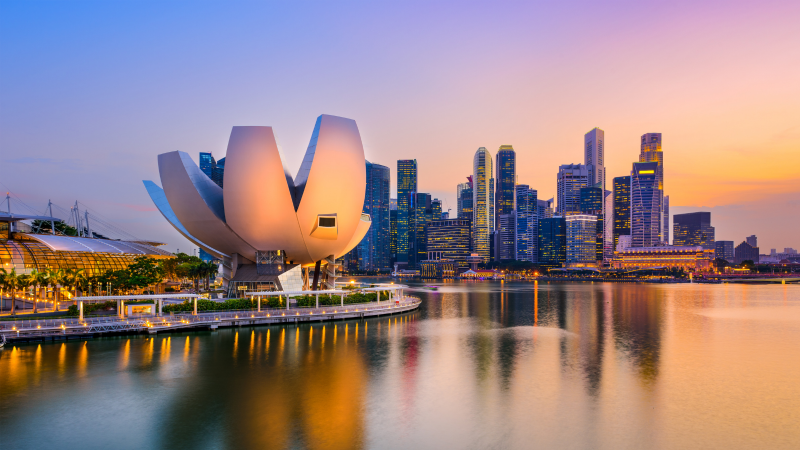
That is especially true in Singapore, reports Bloomberg. With low infection rates, the nation’s financial sector is preparing to return to the trading floor and swanky offices with hopes that the worst of Coronavirus is finished.
But, returning to a traditional office does not mean it’ll be business as usual.
A cautious return to the office
Singapore plans to use more touchless technology to avoid unnecessary contact with one another, according to a study commissioned by the Monetary Authority of Singapore. In addition, lenders may use technology like motion detectors and face-mask detection to help avoid contamination and the spread of Covid.
It’s a cautious approach to getting back to normal, and industries within the United States would be wise to take a similar path.
“Wall Street has also been unveiling plans to bring more bankers back in the coming months, while employees in Shanghai have been back in the office for months after the Chinese city was the world’s first major center to reopen last year after taming the virus,” wrote Fortune.
Precautions include adjusting office density to avoid too many people working in the same area at the same time. And, many companies are allowing their staff to work a certain percentage of their time from a traditional office in addition to working from home.
For instance, Singapore’s United Overseas Bank Ltd will let almost 70% of its workforce work remotely for two days a week once Singapore’s Covid restrictions are officially lifted.
This new approach allows companies around the world to reshape office spaces and working hubs by reducing commercial real estate. Many businesses are cutting commercial footprints to make way for a hybrid work structure that includes both on-site and remote working.
“Banks in Singapore have adapted their operations quickly over the past year to cope with the Covid-19 outbreak,” Samuel Tsien, CEO of Oversea-Chinese Banking Corp, said. “However, the longer-term impact of the pandemic on social behaviors and workplace norms is not yet fully known and understood.”
In the United States, the Covid vaccine might spur on a return to a traditional office, though not all employees want to do that, at least right away.
“As the vaccine becomes more available, you will see a lot of workers returning to the office,” Columbia Business School assistant professor of economics Laura Boudreau told CNBC. But, she admitted that many employees may not want to rush this process.
Even with vaccinations, many challenges remain a primary concern for people as companies decide when to reopen offices. In fact, many jobs were saved due to their ability to be worked remotely. The vast majority of jobs that were lost due to the pandemic were positions that could not be teleworked, according to Pew Research.
“While many workers could no longer wait tables or give haircuts, others – especially those with college degrees – could go online and continue to teach, deliver sermons or trade stocks.”
Naturally, people who work in these remote positions wonder how a return to traditional office work will impact their jobs.
Managers and human resources departments need to be flexible and understanding as businesses bring their staff back into the office, HR expert Rhiannon Staples told CNBC. She added that this is especially true if the last 10 to 12-months of working from home proved successful for the organization
Several high-profile U.S. companies have offered permanent work-from-home opportunities to their employees. Last week, Ford offered 30,000 employees the option to work from home. Last year, Twitter announced that its employees can work from home indefinitely.
This adds to the growing list of companies with work from home options, like Amazon, Capital One, Facebook, Dropbox, Microsoft, Salesforce, Shopify and so many others.