'%3e %3cpath d='M15.9571 0.231934L0.147583 9.39139V32.66L15.9571 41.8195L31.7665 32.66V9.39139L15.9571 0.231934ZM15.9571 33.0172L7.68318 28.2206V13.7798L15.9571 9.00869V23.424L24.2309 28.2206L15.9571 33.0172Z' fill='%23170E30'/%3e %3cpath d='M107.275 23.3727C107.275 22.9645 107.275 22.6073 107.275 22.2756C107.275 21.6377 107.021 20.311 106.766 19.7242C104.628 14.6214 96.3791 15.5144 95.5645 21.3316C94.648 28.0417 102.438 30.9248 106.613 26.2302L104.678 24.929C102.464 26.8936 98.9759 26.5619 98.2885 23.3982H106.384H107.275V23.3727ZM98.2885 21.3826C99.0268 17.9382 103.966 17.7596 104.449 21.3826H98.2885ZM58.472 16.5095C53.9914 15.7441 51.1147 19.1629 51.522 23.4492C51.9802 28.0672 57.8865 30.2614 61.0688 26.766V28.1438H63.9964V16.3309C63.9964 16.3309 61.1706 17.9638 61.0433 18.0403C61.0433 18.0403 59.7959 16.7391 58.472 16.5095ZM57.3264 25.822C53.5077 25.3883 53.5332 19.6987 57.0464 19.1119C62.469 18.1934 62.5963 26.4088 57.3264 25.822ZM126.929 25.4648C126.471 29.5981 118.197 29.3429 116.924 25.6944L119.011 24.4698C119.597 26.1537 122.881 27.1487 123.95 25.6944C125.274 23.9085 121.048 23.4747 120.055 23.092C118.91 22.6328 117.586 21.8419 117.408 20.5151C116.72 15.5655 124.765 14.9786 126.623 18.6781L124.689 19.8263C124.103 18.2954 120.157 17.479 120.284 19.6222C120.361 20.8468 123.517 21.204 124.561 21.6633C126.318 22.4287 127.132 23.4747 126.929 25.4648ZM90.5492 18.2954C87.2142 14.3918 81.3334 16.8667 80.8497 21.7908C80.3151 27.4294 86.5523 30.8993 90.5238 26.6129V28.1438H93.2987V12.1211H90.5238V18.2699L90.5492 18.2954ZM87.7998 25.7965C83.1409 26.5874 82.2499 19.7497 86.4759 19.0864C91.2366 18.3465 92.0003 25.0566 87.7998 25.7965ZM75.8599 18.2954L74.918 17.3004C70.0555 14.3408 65.0657 19.0098 66.4404 24.2402C67.4333 28.0162 72.2958 29.9808 75.3253 27.2253C75.5544 27.0212 75.6053 26.6895 75.8599 26.6129V28.1438H78.6348V12.1211H75.8599V18.2699V18.2954ZM73.1104 25.7965C68.3752 26.4854 67.7897 19.7497 71.8121 19.1119C76.7 18.321 77.311 25.2097 73.1104 25.7965ZM112.392 16.6115H109.465V28.1693H112.392V21.102L115.6 19.2394V16.3054C114.709 16.8156 112.876 17.8872 112.392 18.1679V16.6115ZM42.4335 25.3883H49.969V28.1693H39.353V13.7795H42.4335V25.3883Z' fill='%23170E30'/%3e %3c/g%3e %3cdefs%3e %3cclipPath id='clip0_1_15718'%3e %3crect width='127' height='42' fill='white'/%3e %3c/clipPath%3e %3c/defs%3e %3c/svg%3e)

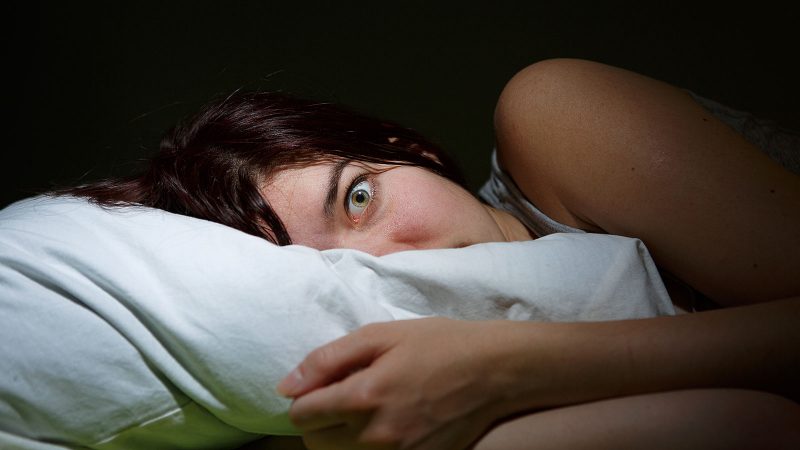
If you haven’t been getting enough shut-eye lately, it could be because you’re listening to music in bed, according to a new study from Baylor University.
“Almost everyone thought music improves their sleep, but we found those who listened to more music slept worse,” the authors said. “What was really surprising was that instrumental music led to worse sleep quality — instrumental music leads to about twice as many earworms.”
The findings revolve around a phenomenon called Involuntary Musical Imagery (INMI) or earworms, in layman’s terms.
Earworm describes a piece of music that’s so memorable that you hear it in your head even when it’s no longer being played. Of the 209 subjects in the study, those who experienced them at least once a week were six times more likely to sleep badly. Instrumental music caused more earworms than lyrical music.
“The more you listen to music, the more likely you are to catch an earworm that won’t go away at bedtime, said Michael Scullin, a sleep researcher at Baylor University and lead author of the paper. “When that happens, chances are your sleep is going to suffer.”
The report was published in the journal of Psychological Science.
Music overexcites our brains
The study started with a questionnaire about music and sleeping habits. Consistently, participants who listened to music the most experienced more earworms and suffered more nights of disrupted sleep.
The researchers then followed up by having the subjects come into the lab and then intentionally induced earworms.
“Before bedtime, we played three popular and catchy songs — Taylor Swift’s ‘Shake It Off,’ Carly Rae Jepsen’s ‘Call Me Maybe,’ and Journey’s ‘Don’t Stop Believin’,” the report said.
Participants were randomly assigned to one of two groups. The first listened to instrumental versions of the same songs. Each had brain-wave activity measured.
The instrumental group was twice as likely to suffer earworms as the lyrics group. The earworm participants had a harder time falling asleep, woke up more frequently during the night, and spent more time in light stages of sleep.
Brain readings found that light sleepers were experiencing memory consolidation processes that prevented them from achieving deep sleep.
How to kill earworms before bed
The researchers offered a few methods for potentially reducing the likelihood of earworms.
Enforcing a nightly cut-off time for listening to music could help those who regularly experience earworms. Some might even need to limit their music time during the day if they hear earworms nightly.
Before bed, others might try engaging in activities requiring cognitive function, like puzzles or games. Or they could dedicate time each night to making to-do lists for the following day or writing in a journal. The idea is to break any mental connection you may have trained in yourself between being in bed and hearing earworms.
“If you commonly pair listening to music while being in bed, then you’ll have that association where being in that context might trigger an earworm even when you’re not listening to music, such as when you’re trying to fall asleep,” the authors said.