'%3e %3cpath d='M15.9571 0.231934L0.147583 9.39139V32.66L15.9571 41.8195L31.7665 32.66V9.39139L15.9571 0.231934ZM15.9571 33.0172L7.68318 28.2206V13.7798L15.9571 9.00869V23.424L24.2309 28.2206L15.9571 33.0172Z' fill='%23170E30'/%3e %3cpath d='M107.275 23.3727C107.275 22.9645 107.275 22.6073 107.275 22.2756C107.275 21.6377 107.021 20.311 106.766 19.7242C104.628 14.6214 96.3791 15.5144 95.5645 21.3316C94.648 28.0417 102.438 30.9248 106.613 26.2302L104.678 24.929C102.464 26.8936 98.9759 26.5619 98.2885 23.3982H106.384H107.275V23.3727ZM98.2885 21.3826C99.0268 17.9382 103.966 17.7596 104.449 21.3826H98.2885ZM58.472 16.5095C53.9914 15.7441 51.1147 19.1629 51.522 23.4492C51.9802 28.0672 57.8865 30.2614 61.0688 26.766V28.1438H63.9964V16.3309C63.9964 16.3309 61.1706 17.9638 61.0433 18.0403C61.0433 18.0403 59.7959 16.7391 58.472 16.5095ZM57.3264 25.822C53.5077 25.3883 53.5332 19.6987 57.0464 19.1119C62.469 18.1934 62.5963 26.4088 57.3264 25.822ZM126.929 25.4648C126.471 29.5981 118.197 29.3429 116.924 25.6944L119.011 24.4698C119.597 26.1537 122.881 27.1487 123.95 25.6944C125.274 23.9085 121.048 23.4747 120.055 23.092C118.91 22.6328 117.586 21.8419 117.408 20.5151C116.72 15.5655 124.765 14.9786 126.623 18.6781L124.689 19.8263C124.103 18.2954 120.157 17.479 120.284 19.6222C120.361 20.8468 123.517 21.204 124.561 21.6633C126.318 22.4287 127.132 23.4747 126.929 25.4648ZM90.5492 18.2954C87.2142 14.3918 81.3334 16.8667 80.8497 21.7908C80.3151 27.4294 86.5523 30.8993 90.5238 26.6129V28.1438H93.2987V12.1211H90.5238V18.2699L90.5492 18.2954ZM87.7998 25.7965C83.1409 26.5874 82.2499 19.7497 86.4759 19.0864C91.2366 18.3465 92.0003 25.0566 87.7998 25.7965ZM75.8599 18.2954L74.918 17.3004C70.0555 14.3408 65.0657 19.0098 66.4404 24.2402C67.4333 28.0162 72.2958 29.9808 75.3253 27.2253C75.5544 27.0212 75.6053 26.6895 75.8599 26.6129V28.1438H78.6348V12.1211H75.8599V18.2699V18.2954ZM73.1104 25.7965C68.3752 26.4854 67.7897 19.7497 71.8121 19.1119C76.7 18.321 77.311 25.2097 73.1104 25.7965ZM112.392 16.6115H109.465V28.1693H112.392V21.102L115.6 19.2394V16.3054C114.709 16.8156 112.876 17.8872 112.392 18.1679V16.6115ZM42.4335 25.3883H49.969V28.1693H39.353V13.7795H42.4335V25.3883Z' fill='%23170E30'/%3e %3c/g%3e %3cdefs%3e %3cclipPath id='clip0_1_15718'%3e %3crect width='127' height='42' fill='white'/%3e %3c/clipPath%3e %3c/defs%3e %3c/svg%3e)

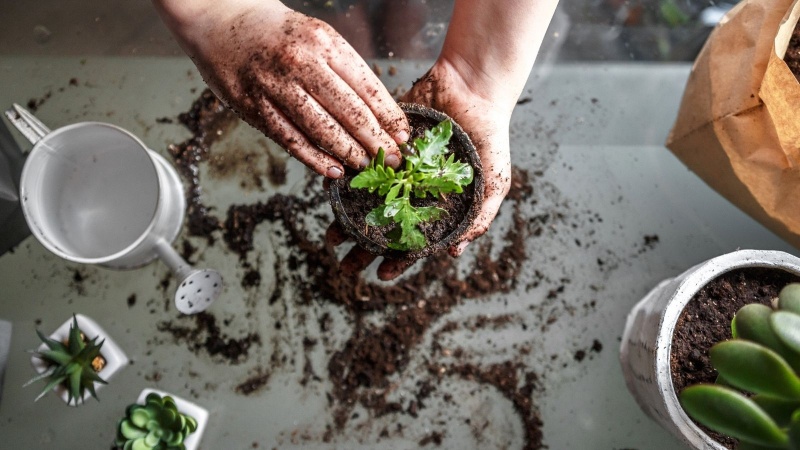
A new study has found that frequent gardening boosts well-being and provides the same kind of physical fitness that we usually associate with more traditional workouts.
Researchers from Britain’s Royal Horticultural Society found that exposure to sunlight, healthy bacteria, and greenery (aka the “daylight spectrum”) increases the mood-stabilizing hormone serotonin and helps the brain focus on retention. This makes the work associated with gardening seem like less exertion than it actually is. A gardener essentially lifts and performs squats between walks.
The research indicated that just 30 minutes of gardening was equivalent to 30 minutes of badminton, volleyball, or yoga with respect to the calories being burned. What’s more, the vitamin D provided by direct sunlight increases the amount of energy we generate while exercising and increases oxidation of the body tissue.
Participants who gardened at least two to three times a week enjoyed the most profound benefits. Previously conducted research has shown that exercising outdoors can also lower blood pressure.
“The data supports the notion that domestic gardens should be given greater prominence in urban planning debates, due to the role they play in providing health benefits,” the study authors wrote.
Green thumb prevents the blues
Although the authors of the new report documented a slew of physical health benefits from habitual gardening, most people seek to improve their mood.
Here’s how it works: Any kind of physical activity activates chemicals in the brain important to mood regulation. The same is true of exposure to sunlight. Additionally, there are bacteria that thrive in greenery that also contribute to the production of serotonin.
Gardners scored higher on average than non-gardeners in the study. This was doubly true for people with existing health conditions. Moreover, satisfaction and engagement improved as the amount of green space increased in people’s gardens.
“Research over the last decade at universities from around the globe show that participation in regular outdoor exercise can often be as effective as antidepressants in treating mild depression,” author Shawna Coronado said.